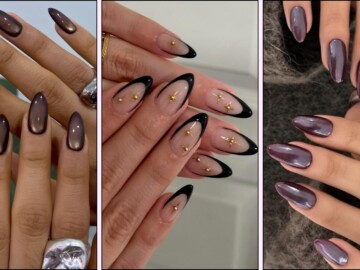
Neutral Chrome Nails: The Shades, Finishes and DIY Tips to Know
Follow The Pink Issue on Google.
Chrome finish takes its cue from whatever color sits underneath it, which is why two people can use the same powder and walk out with completely different manicures.
Over bright colors, it looks louder and more metallic. Over black, burgundy or navy, it turns into a full mirror situation.
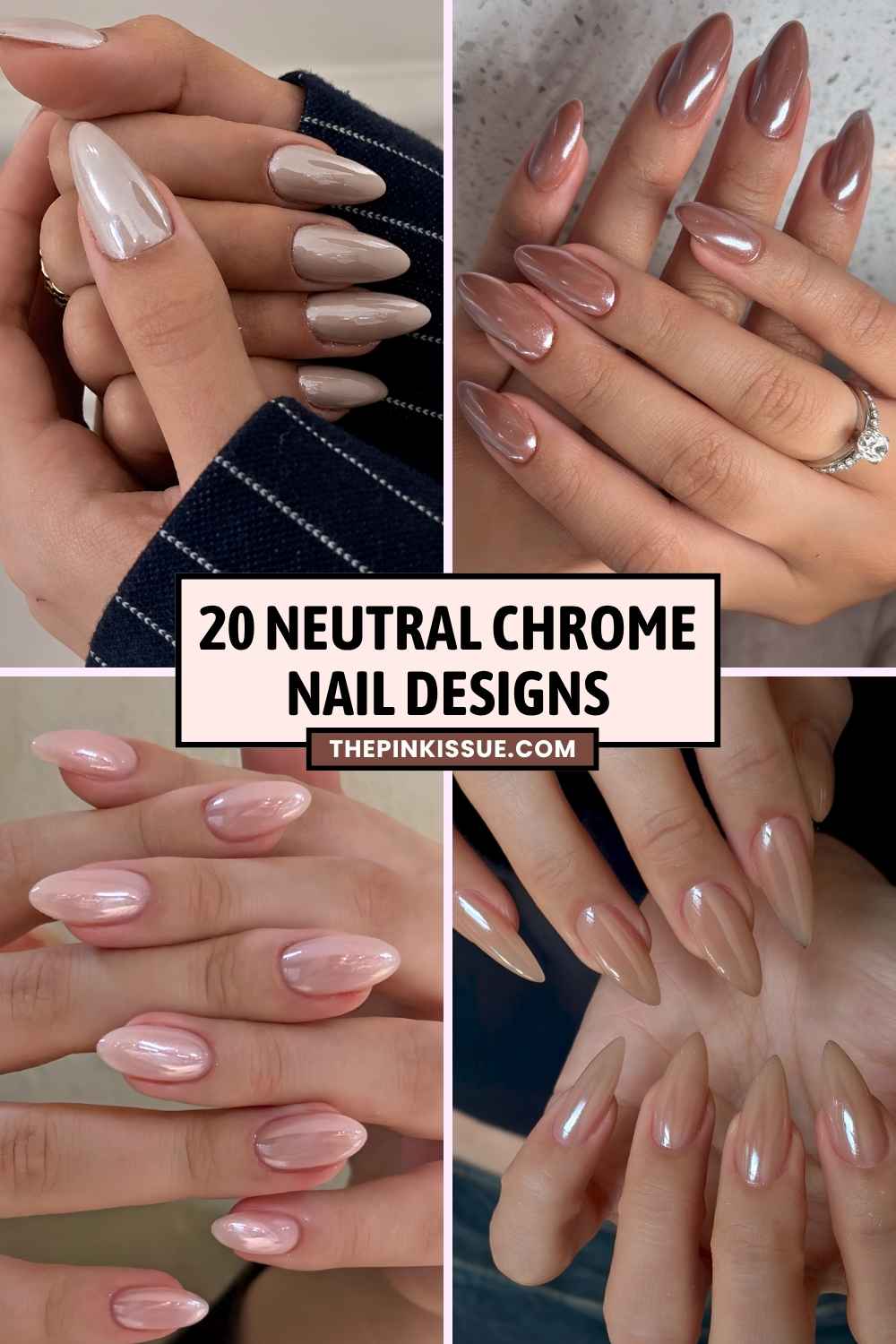
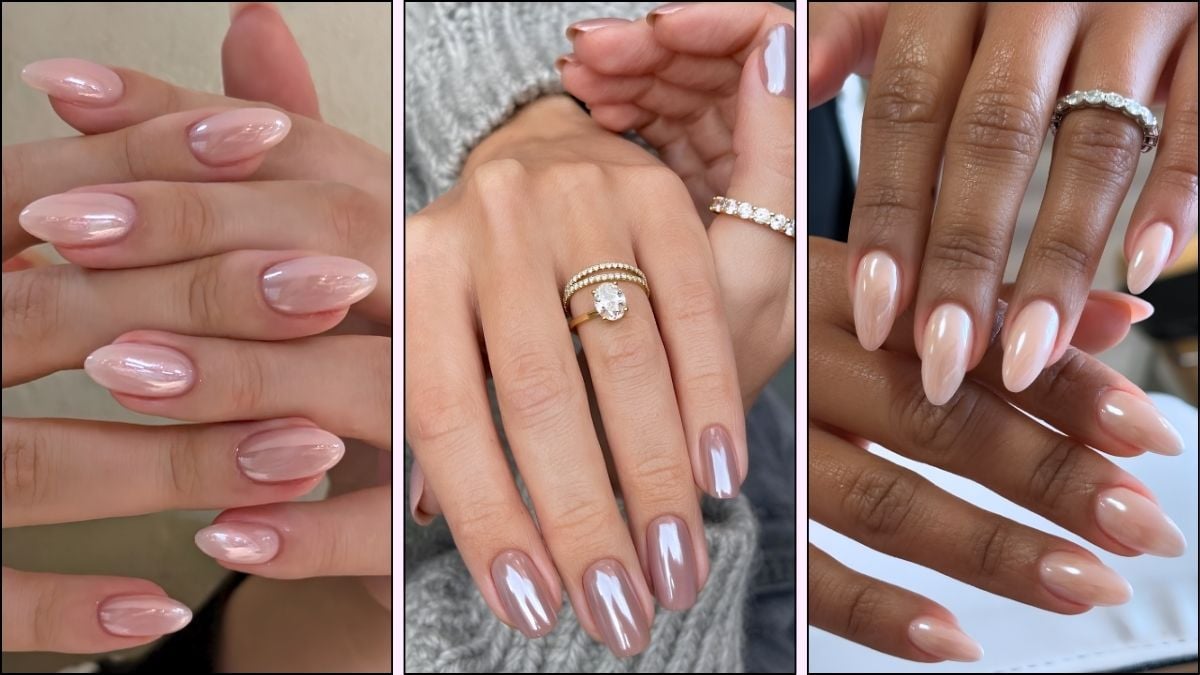
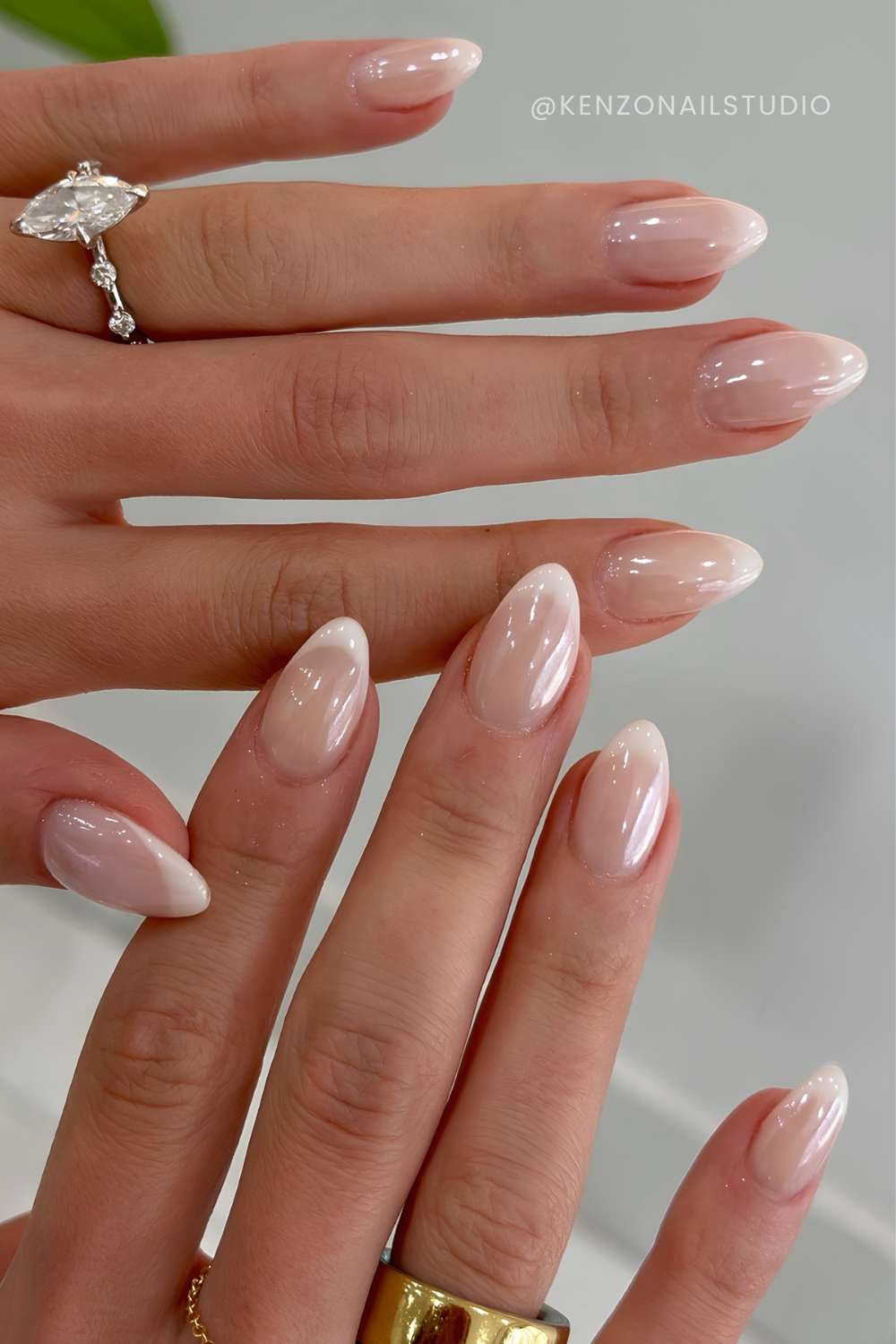
But over neutrals, it softens into that pearly, glazed finish that has ruled the nail feeds since Hailey Bieber’s glazed donut manicure. That look was never about aggressive chrome; it was a sheer neutral base with just enough reflection on top.
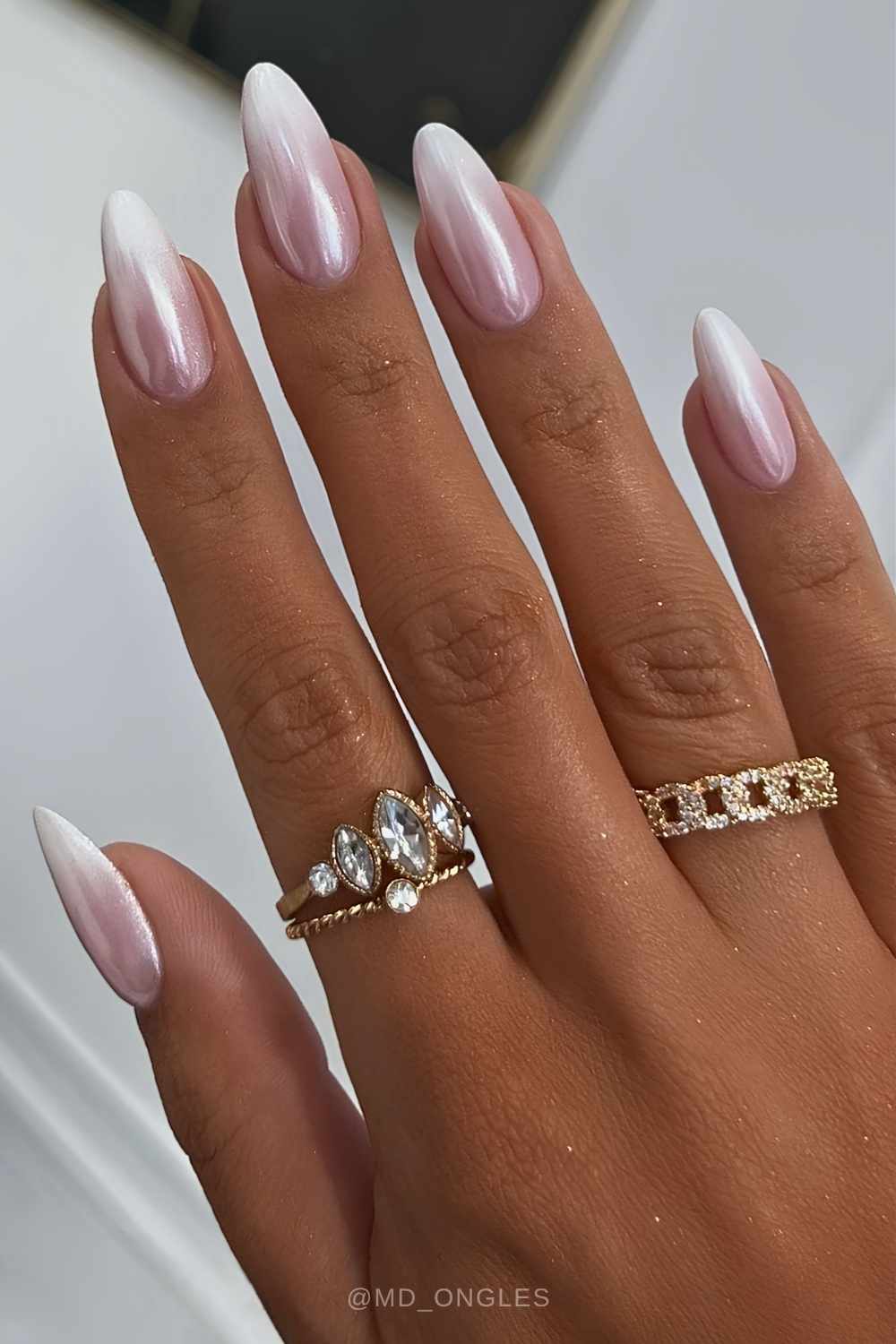
That’s the version I want on my hands roughly 11 months of the year.
The reason it works is dimension. A regular nude can look flat, while a neutral mani with chrome finish catches the light and shifts between glossy, frosted, pearly and almost satin depending on the angle.
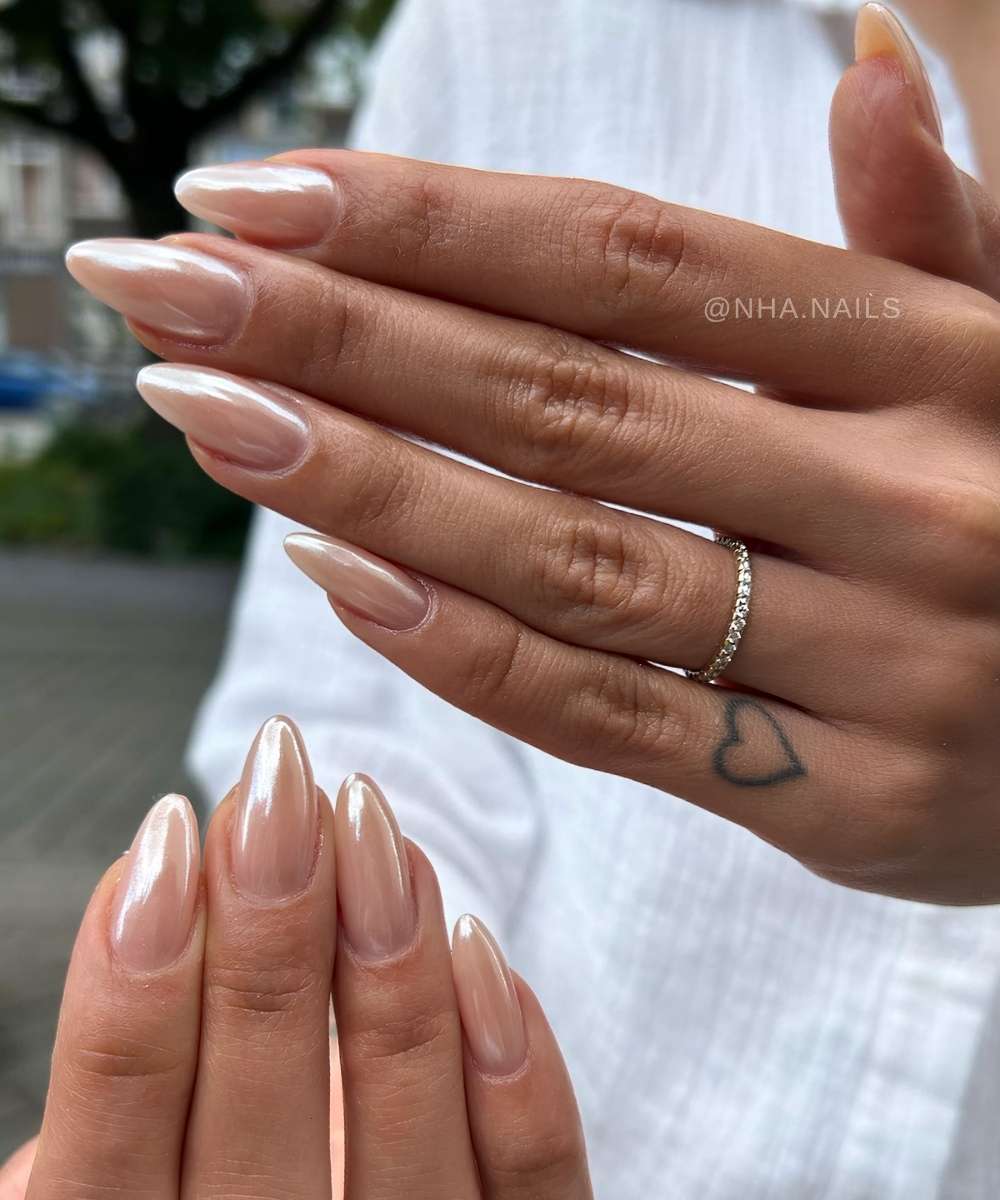
The neutral chrome palette is way bigger than beige
The biggest misconception with neutral chrome is treating “neutral” like it means beige nails and nothing else.
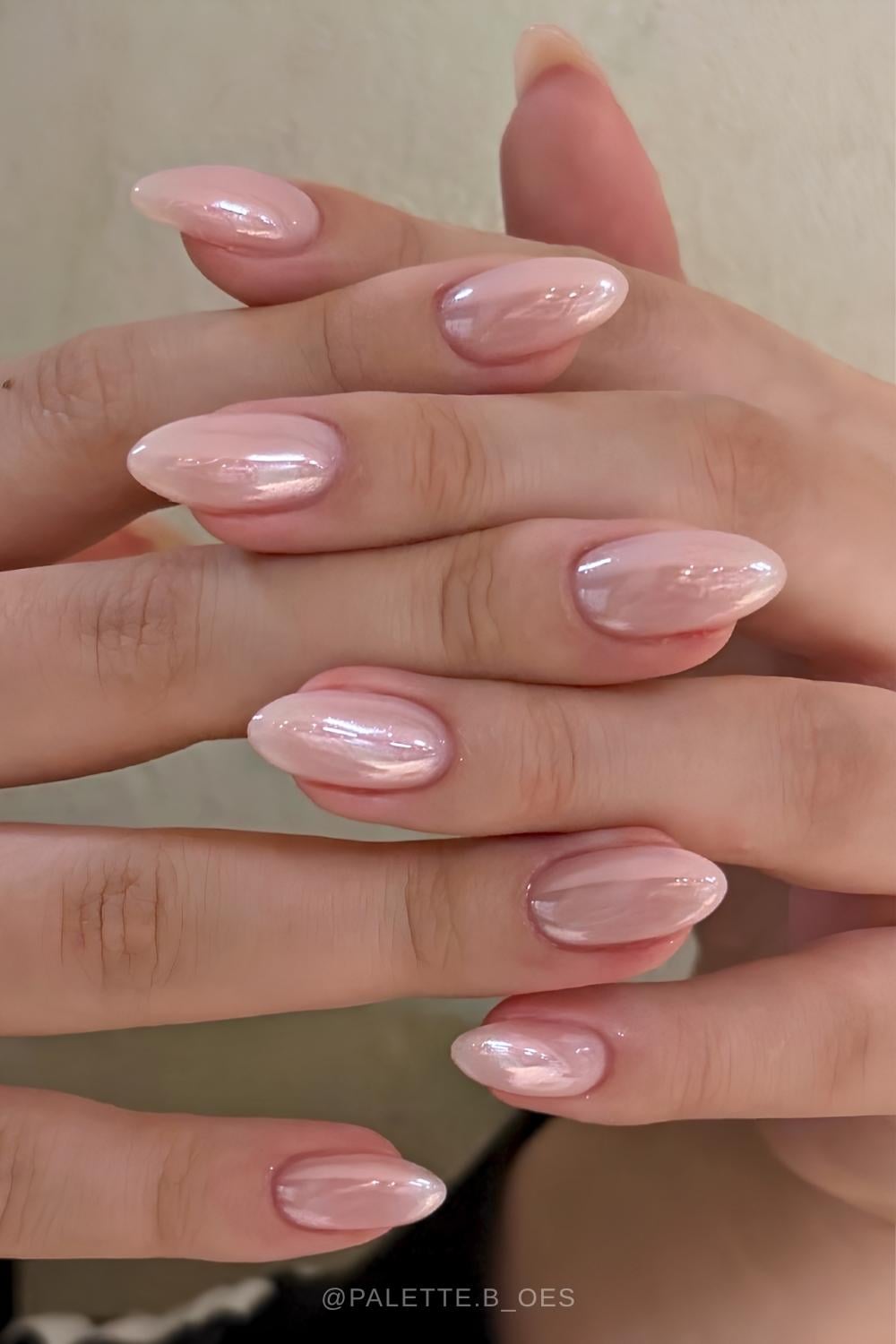
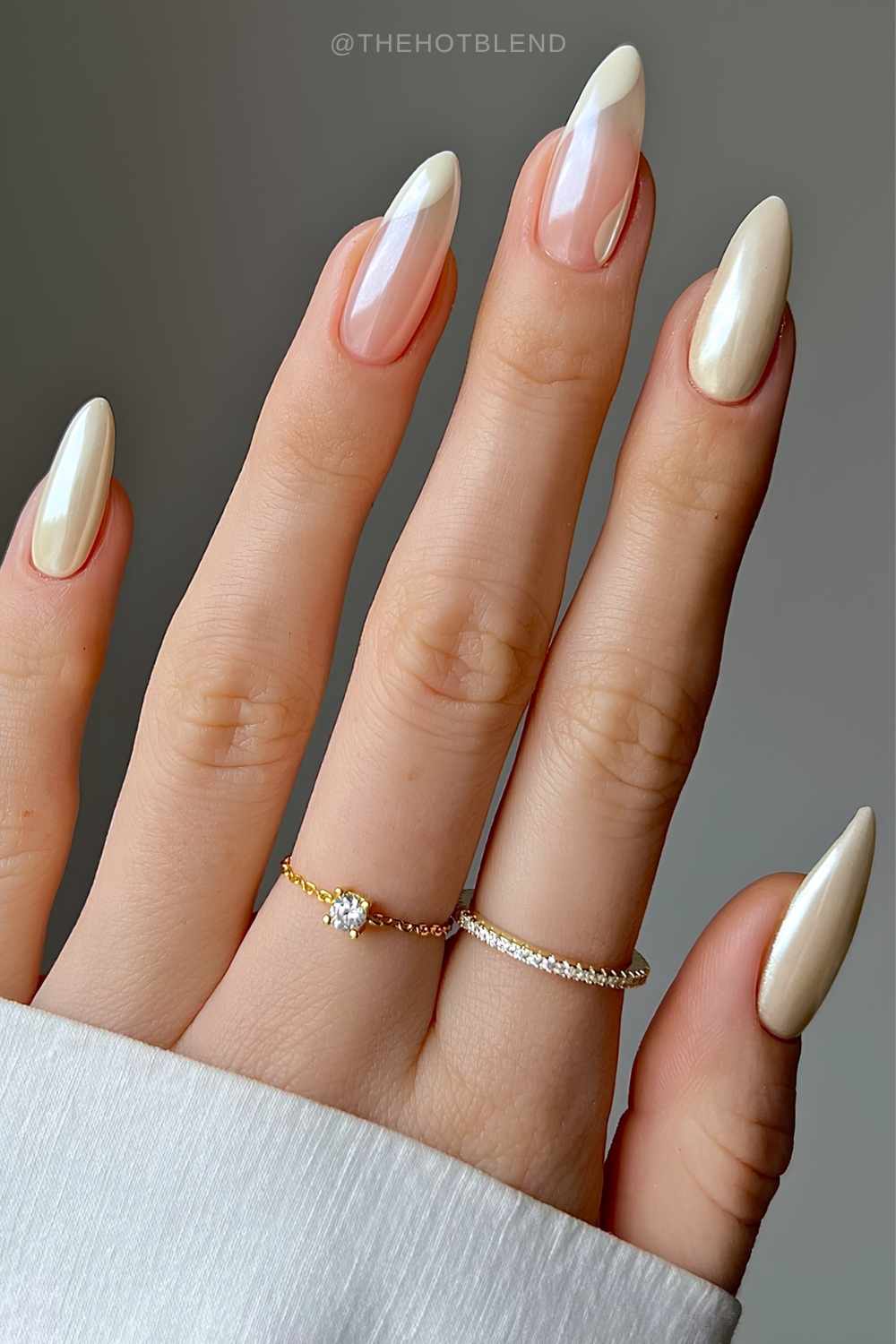
At the baby chrome end, you have milky white, off-white, ivory, cream and vanilla. Go sheer rather than opaque - OPI Funny Bunny is the eternal pick here because the coverage stays translucent, so you get a glazed look rather than a flat metallic white that looks like correction fluid.
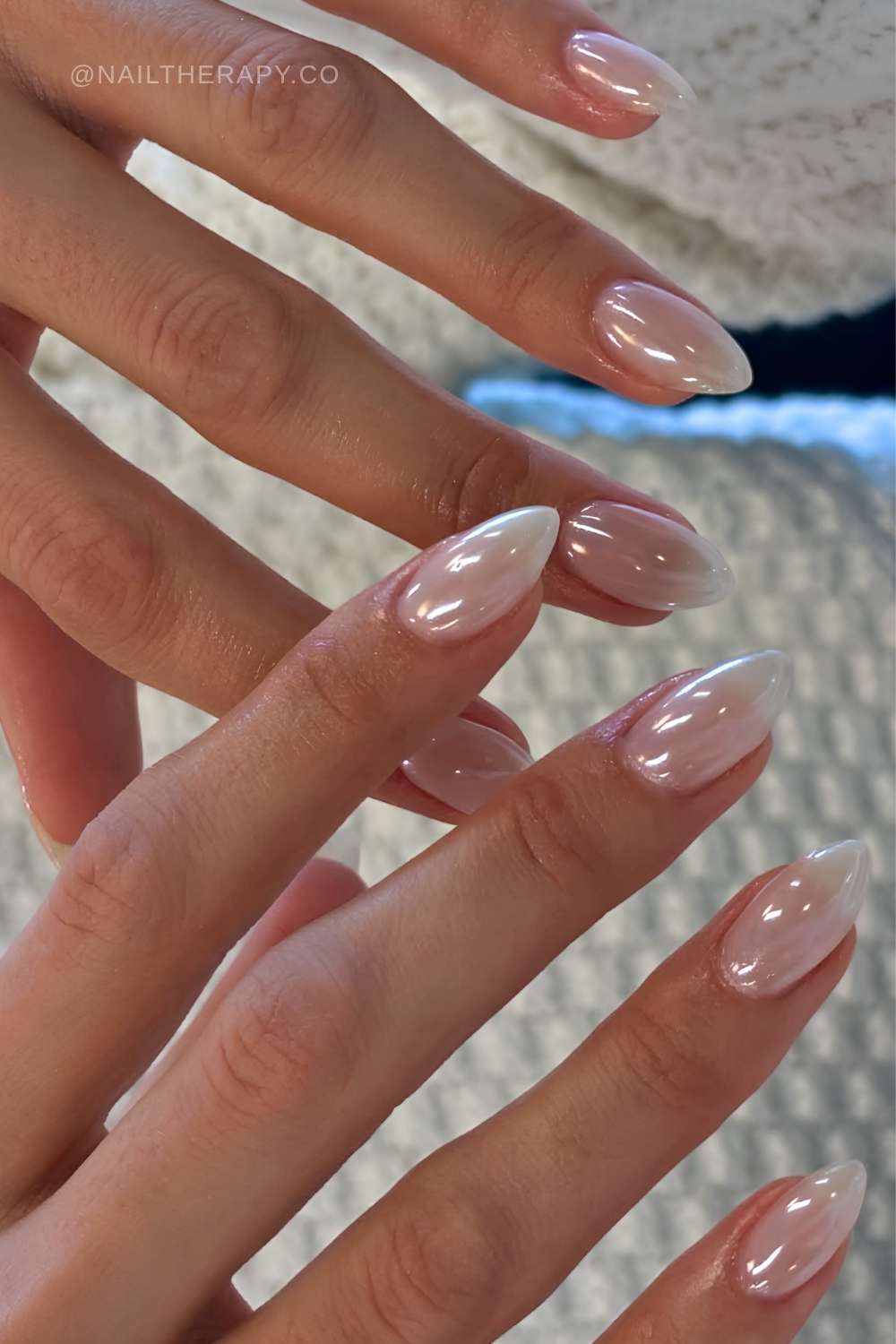
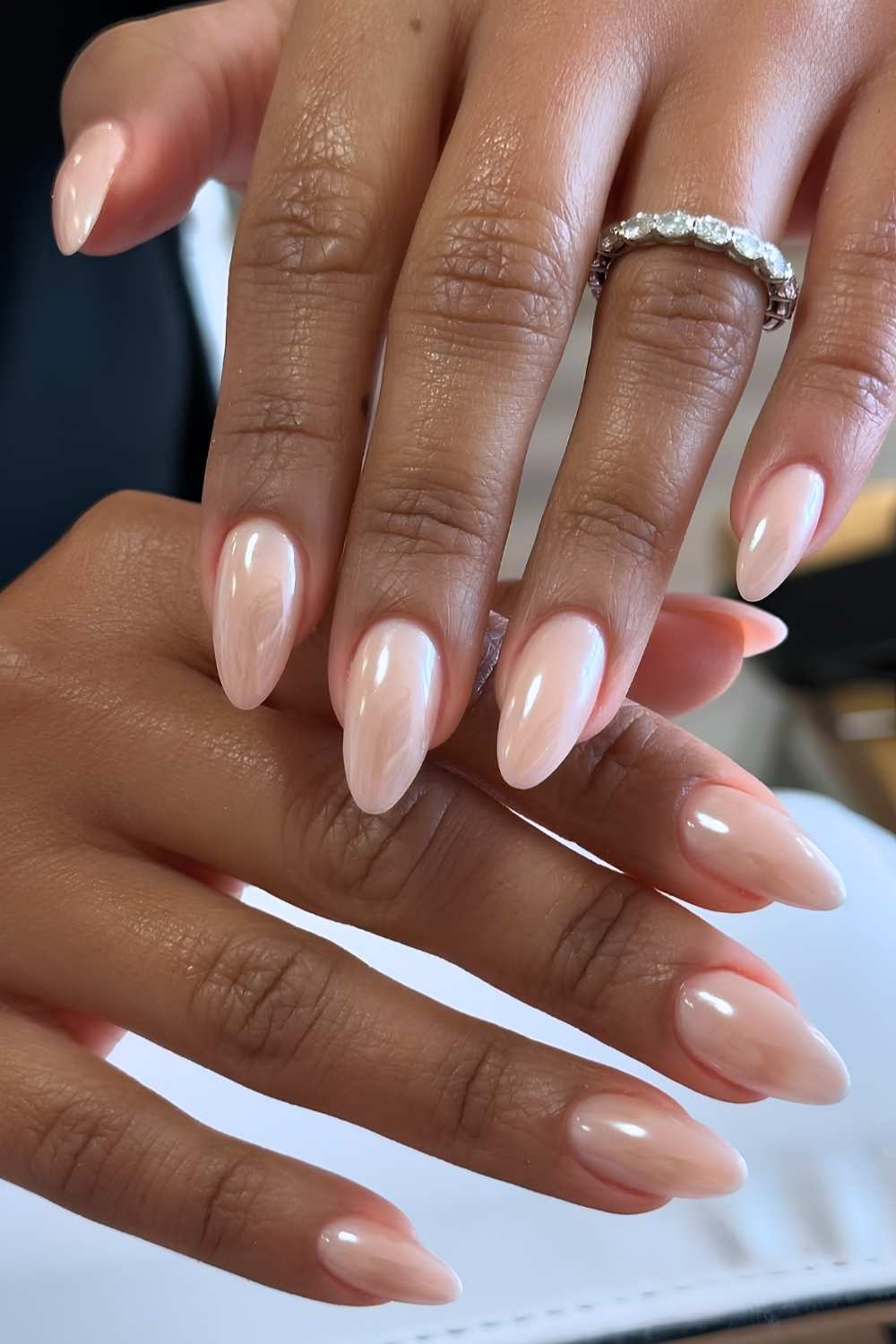
Warmer neutrals like blush, ballet pink, dusty rose, mauve, and pink-beige take chrome in a softer, rosier direction. OPI Bubble Bath and Essie Ballet Slippers both live in this family and both are gorgeous under reflective powder.
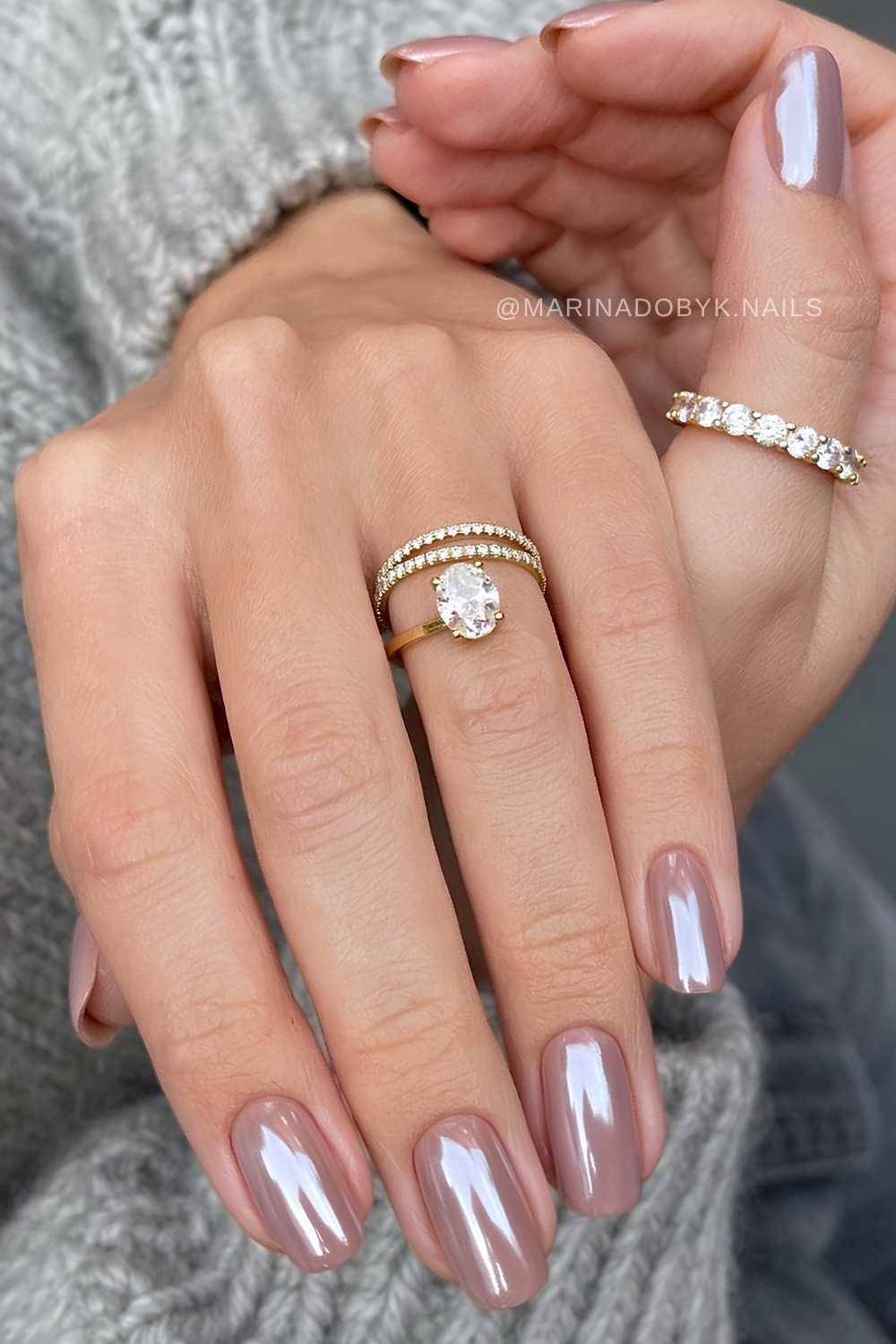
Shades like beige, sand, oatmeal, almond, biscuit, and light tan are creamier and warmer, more skin-adjacent. Essie Topless & Barefoot is a soft beige-pink that gives you something less sugary than the standard milky pink chrome without going cold.
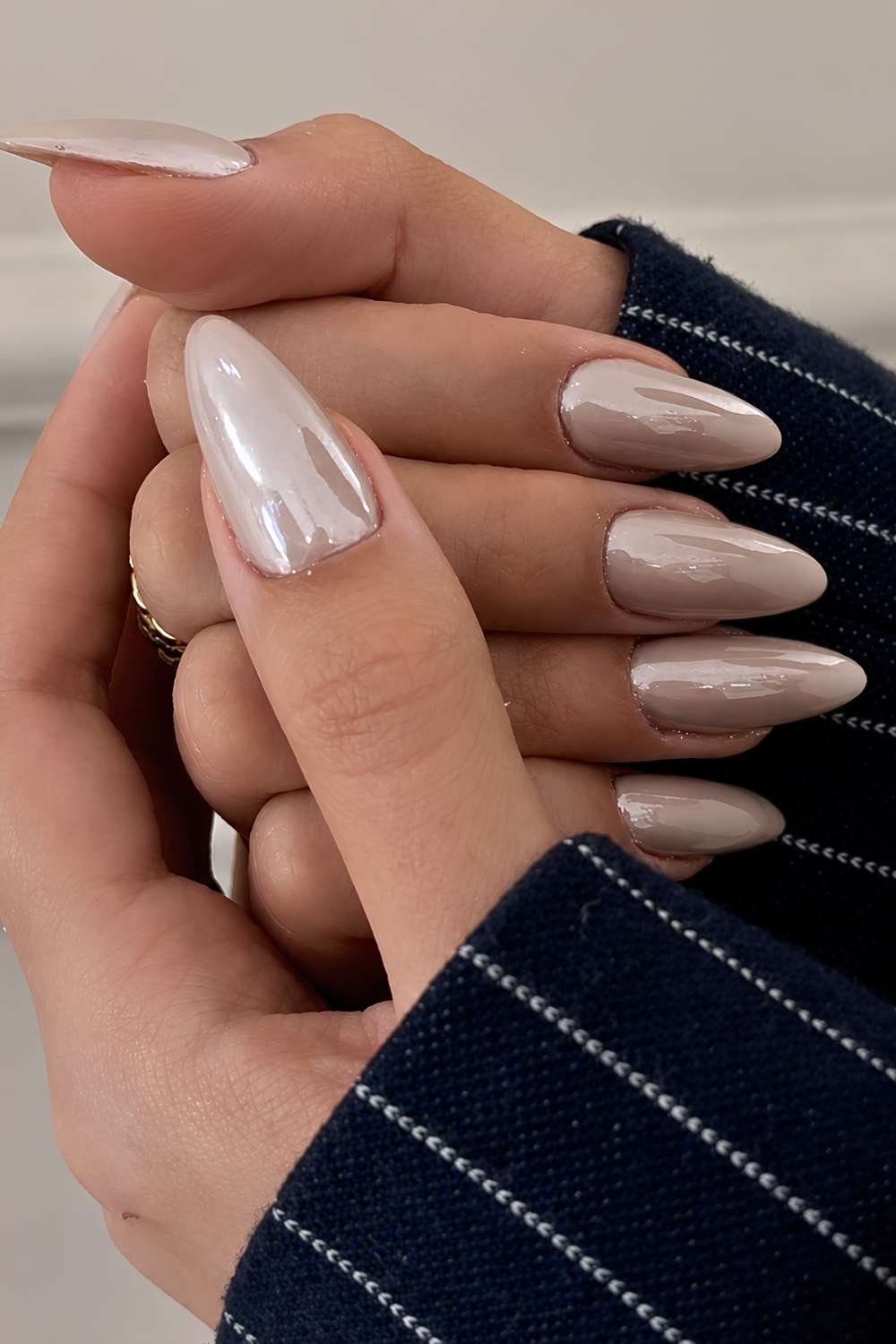
Cooler neutrals including stone, greige, mushroom, mink and taupe make chrome look slightly smokier. OPI Berlin There Done That is a creamy taupe-gray with subtle lilac undertones, so a chrome powder over it gives you a much cooler neutral finish than vanilla or blush.
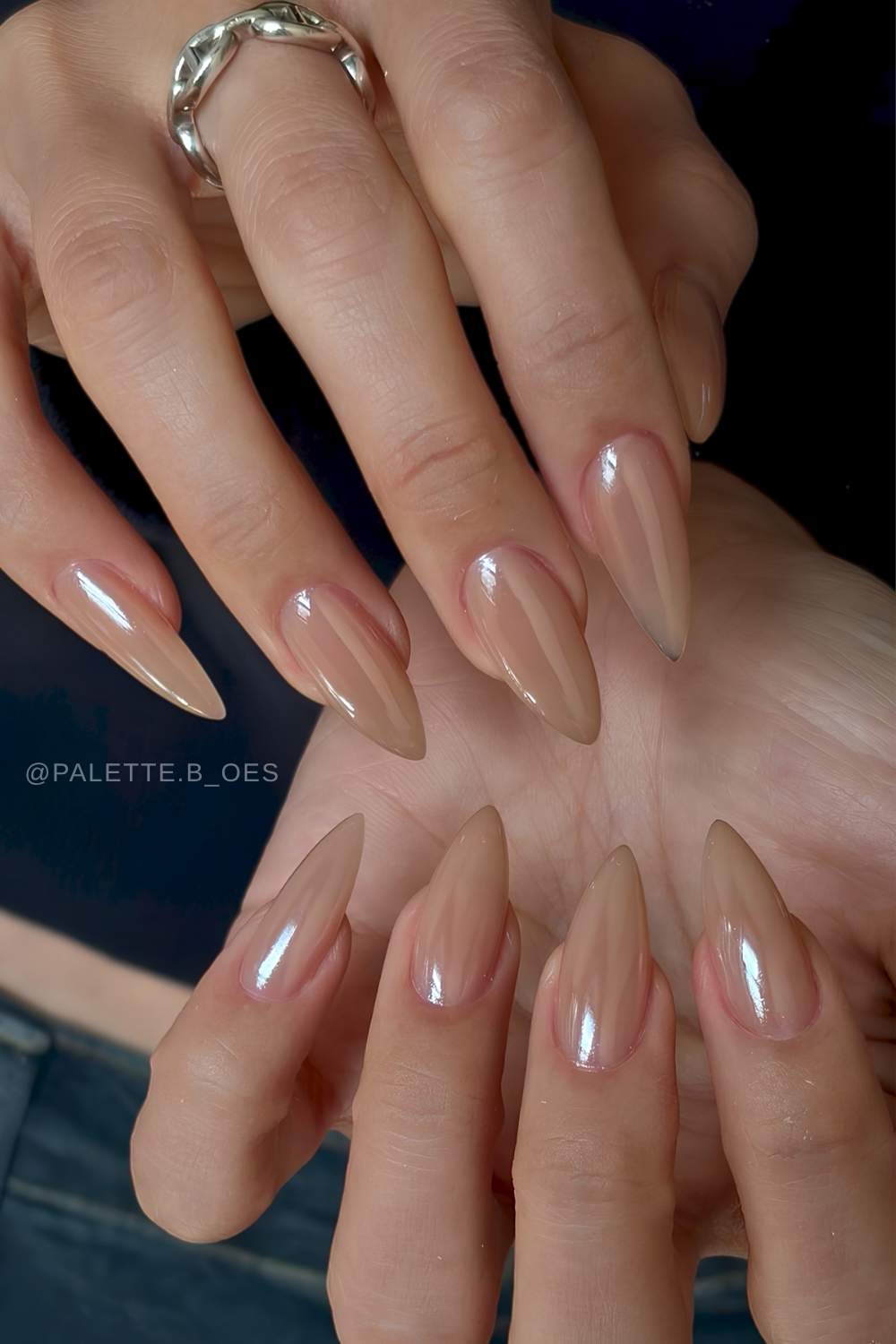
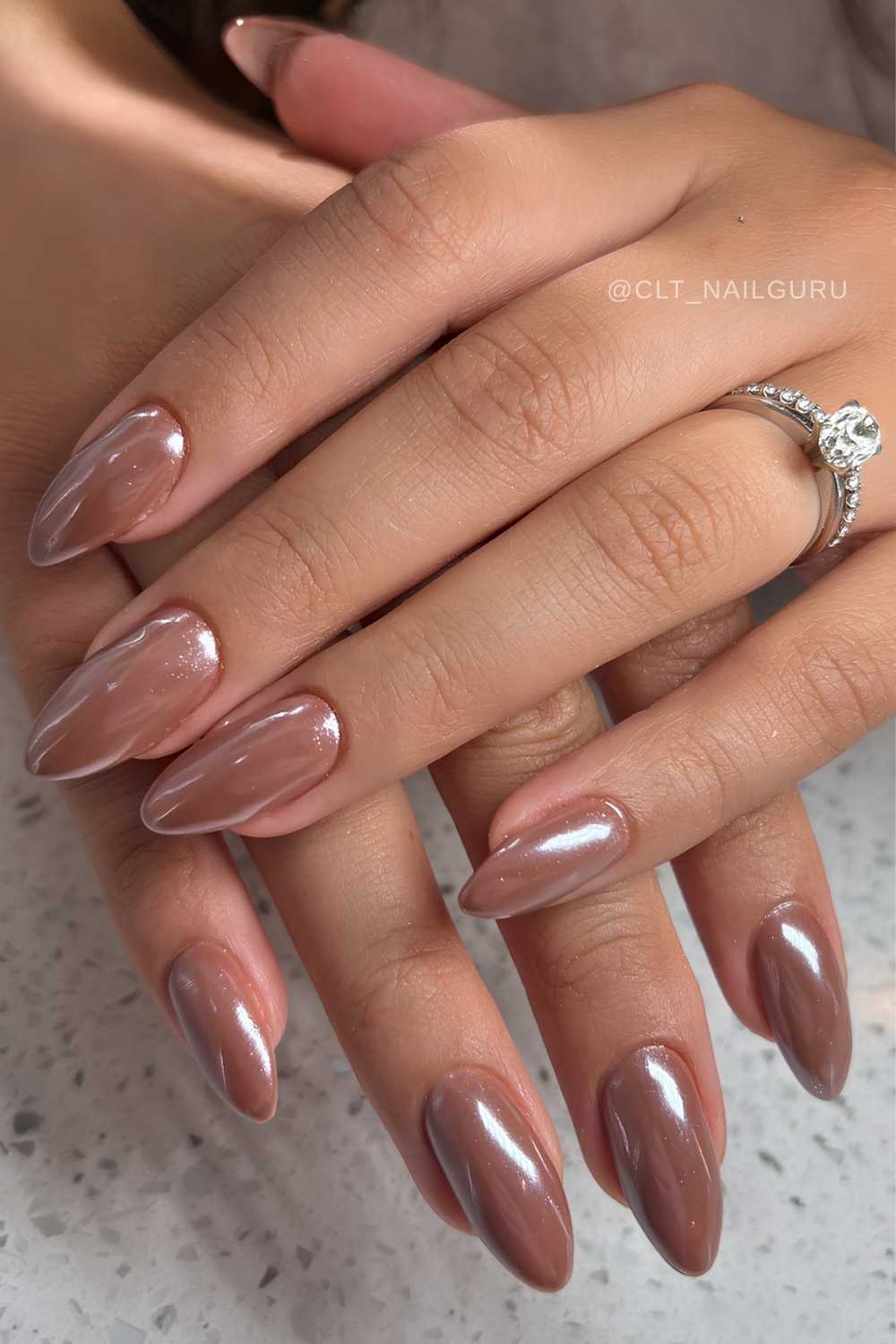
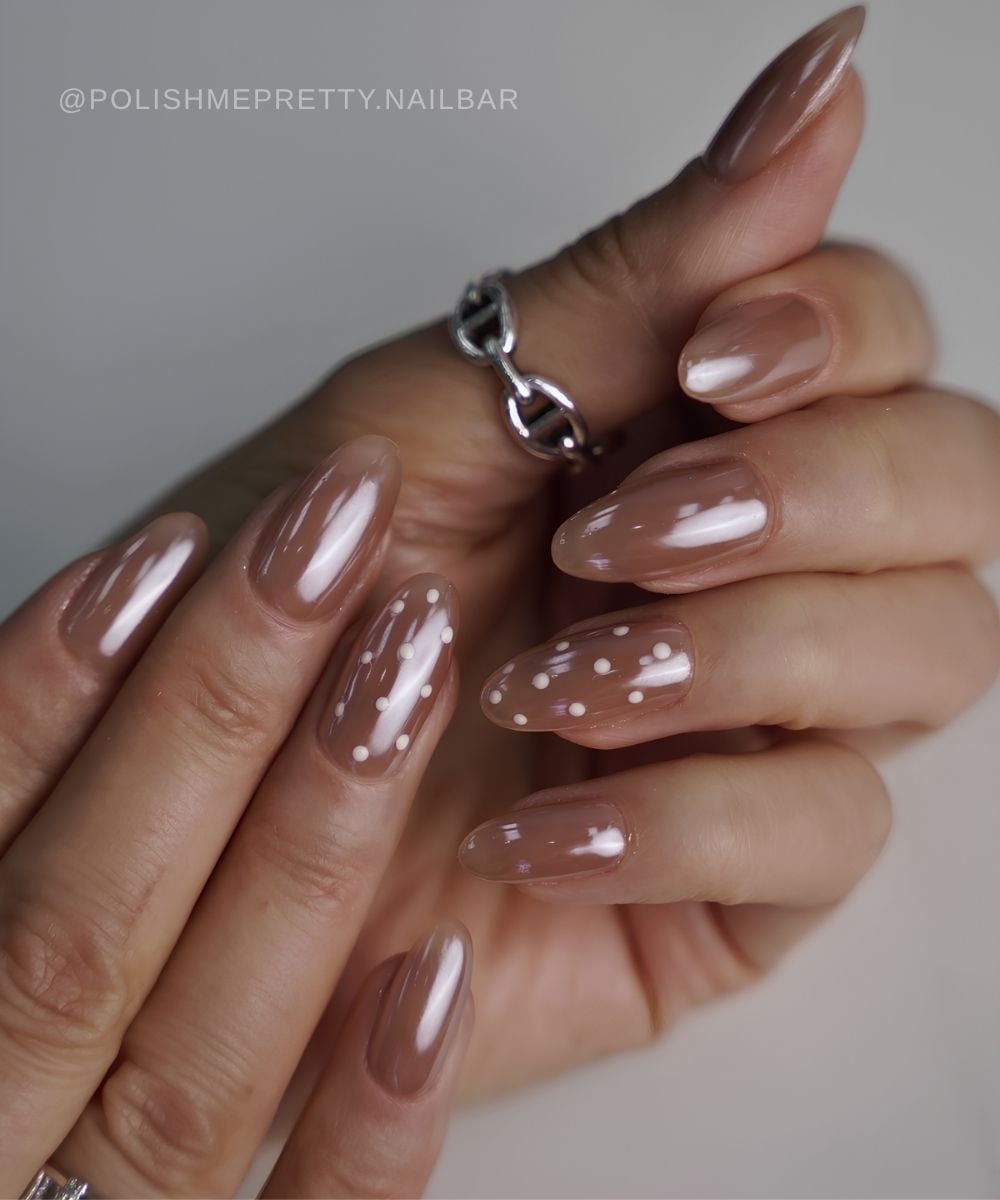
And neutral absolutely does not stop at pale shades. Camel, latte, café au lait, caramel, mocha and soft brown all work under chrome too, especially if you want more depth while keeping the palette neutral. OPI Dulce de Leche is my go to.
You can also skip the color almost entirely and wear chrome over a completely sheer or clear base. That leaves the natural nail visible underneath and gives you the lightest, glassiest version of the trend - more glaze than metallic.
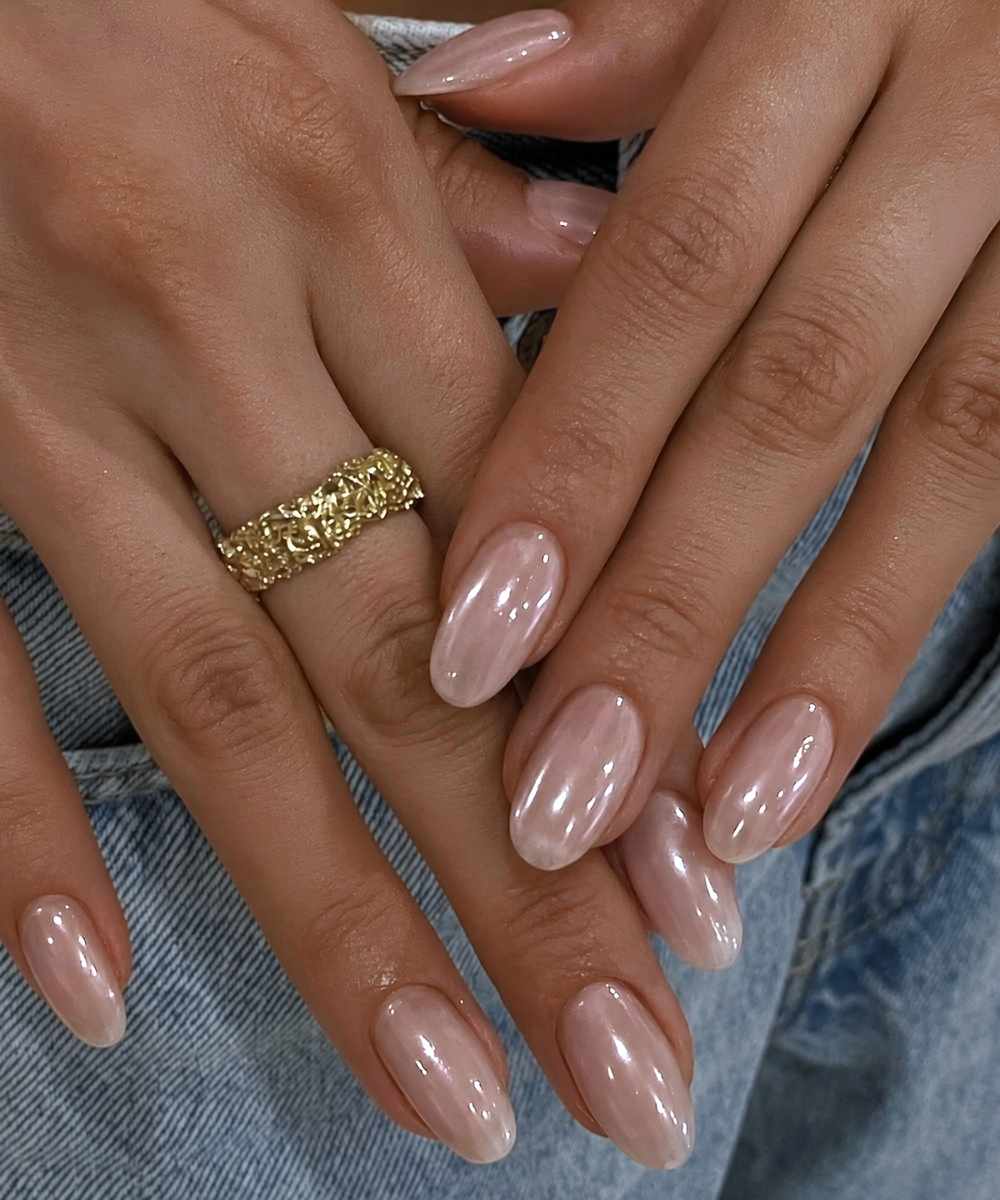
As for the chrome itself, OPI Tin Man Can Glaze is the obvious reference point: it’s the silvery-white powder used for the original glazed donut look. If you want to experiment with different finishes instead, Born Pretty sells multi-jar sets.
How to DIY neutral chrome nails
The simplest DIY is full-coverage chrome because there are no French lines or tiny nail-art details to mess up.
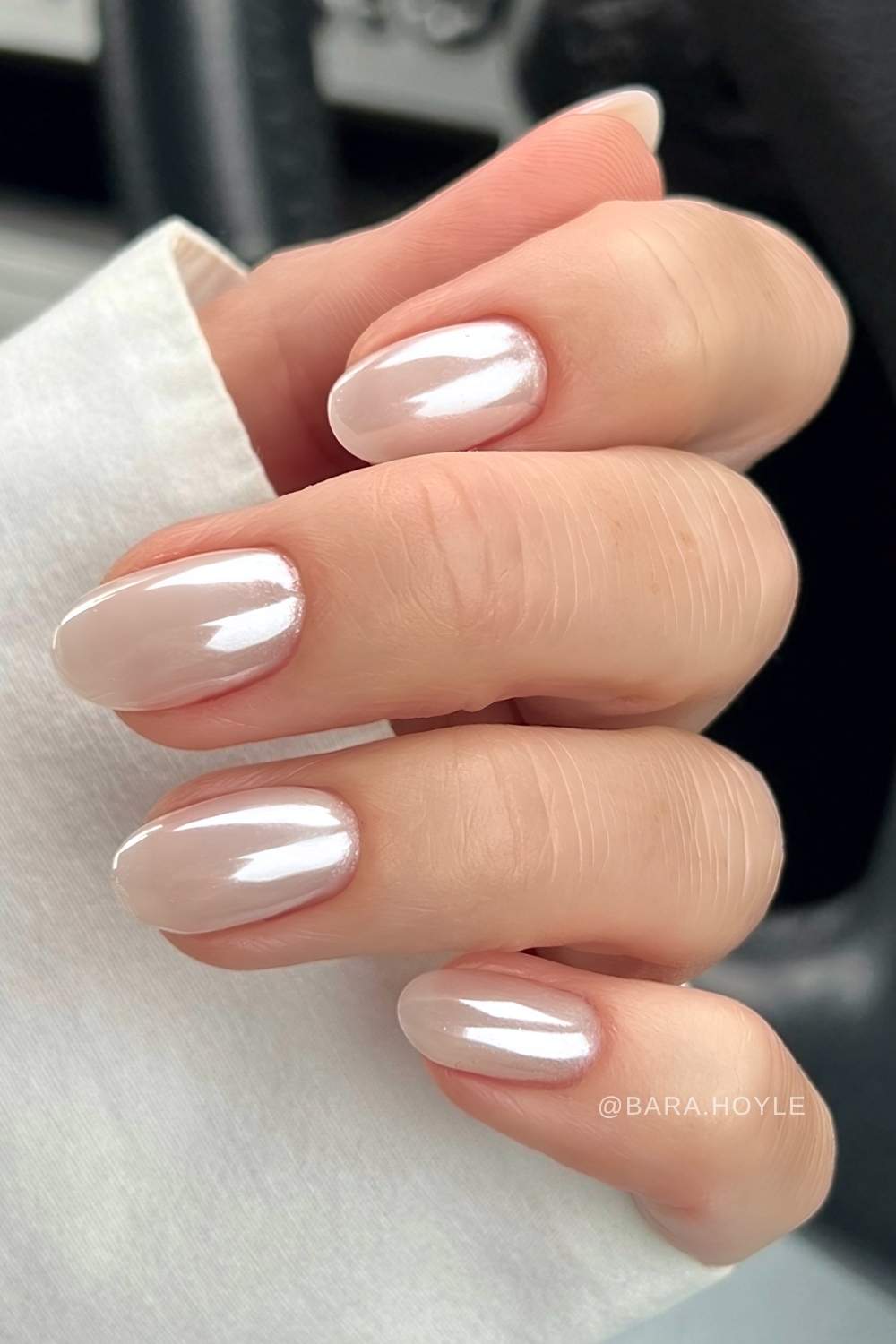
Gel version
- Prep your nails and apply your usual gel base coat. Cure according to your system.
- One or two thin coats of your neutral gel color, curing each one.
- Apply a compatible no-wipe top coat. This is where you need to follow your specific brand’s instructions carefully because some chrome systems require a shorter cure before applying pigment.
- Using a sponge applicator, pick up a very small amount of chrome powder and rub it firmly across the nail until the pigment becomes smooth and reflective.
- Brush off the excess, then seal with another layer of top coat and wrap the free edge properly.
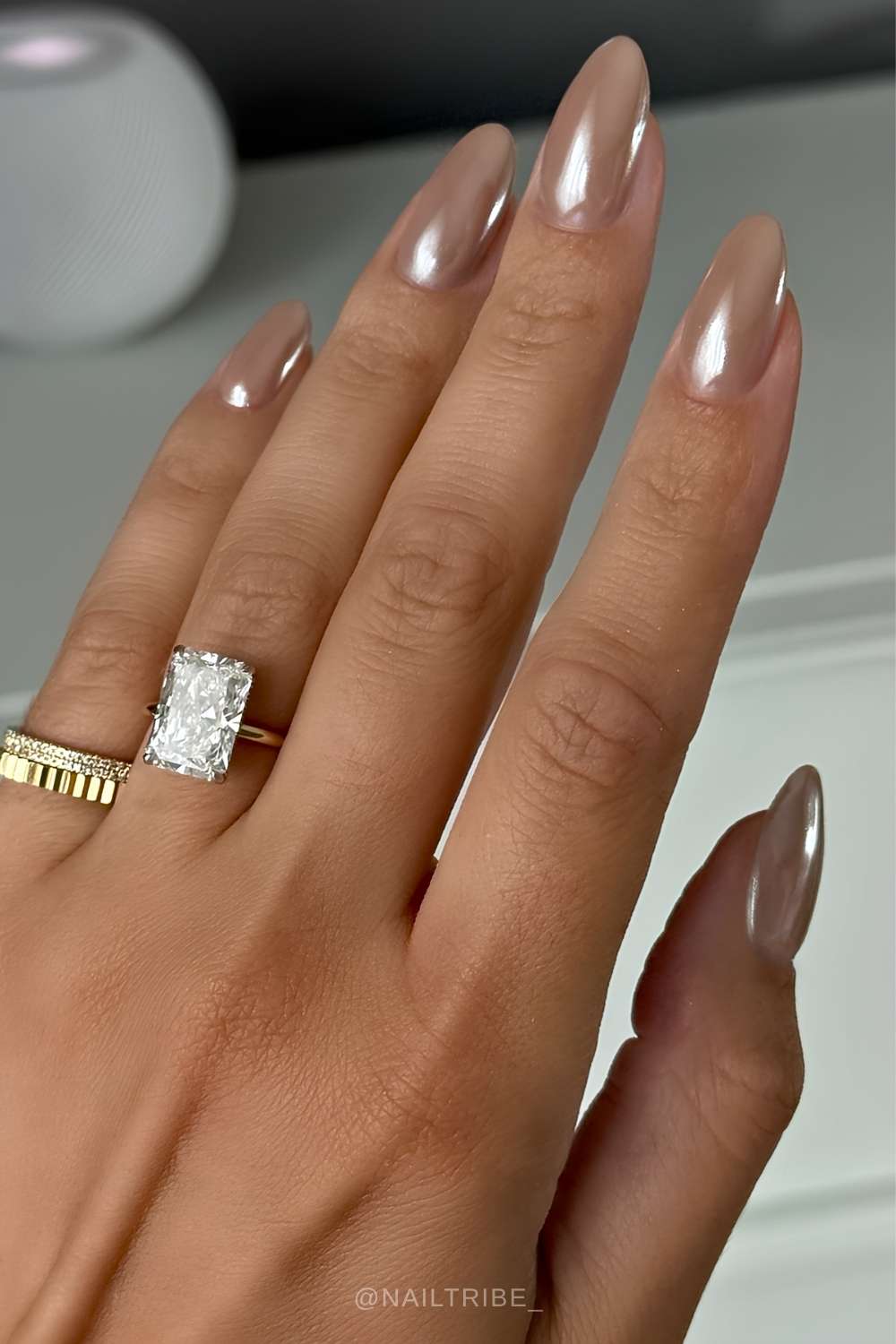
The number one mistake is loading up the applicator. You need way less powder than instinct tells you. Too much can leave the finish dusty or grainy instead of smooth.
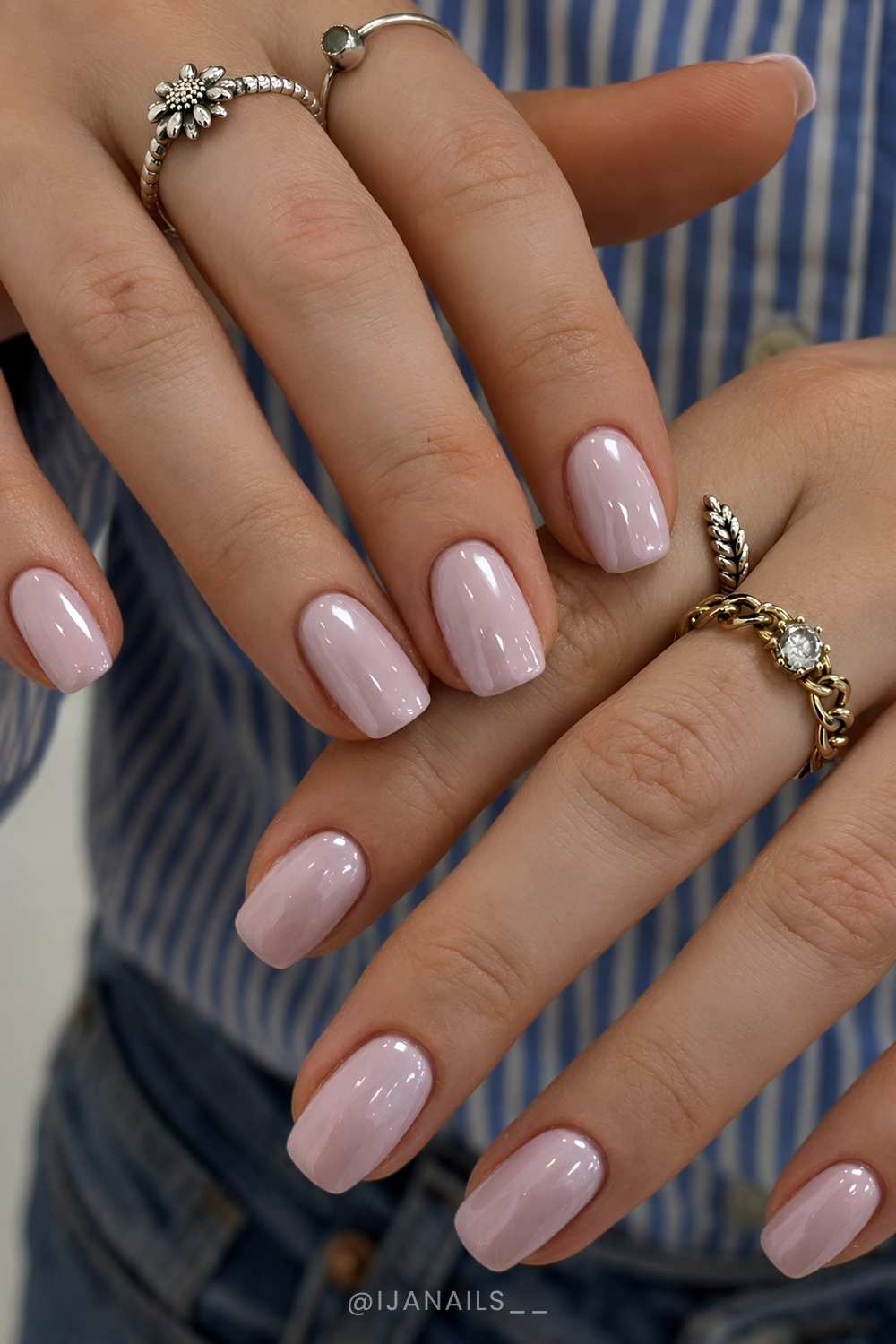
Your base manicure also needs to be even. Chrome reflects light across the entire nail, so every bump suddenly receives its own press tour.
The easy no-gel Version
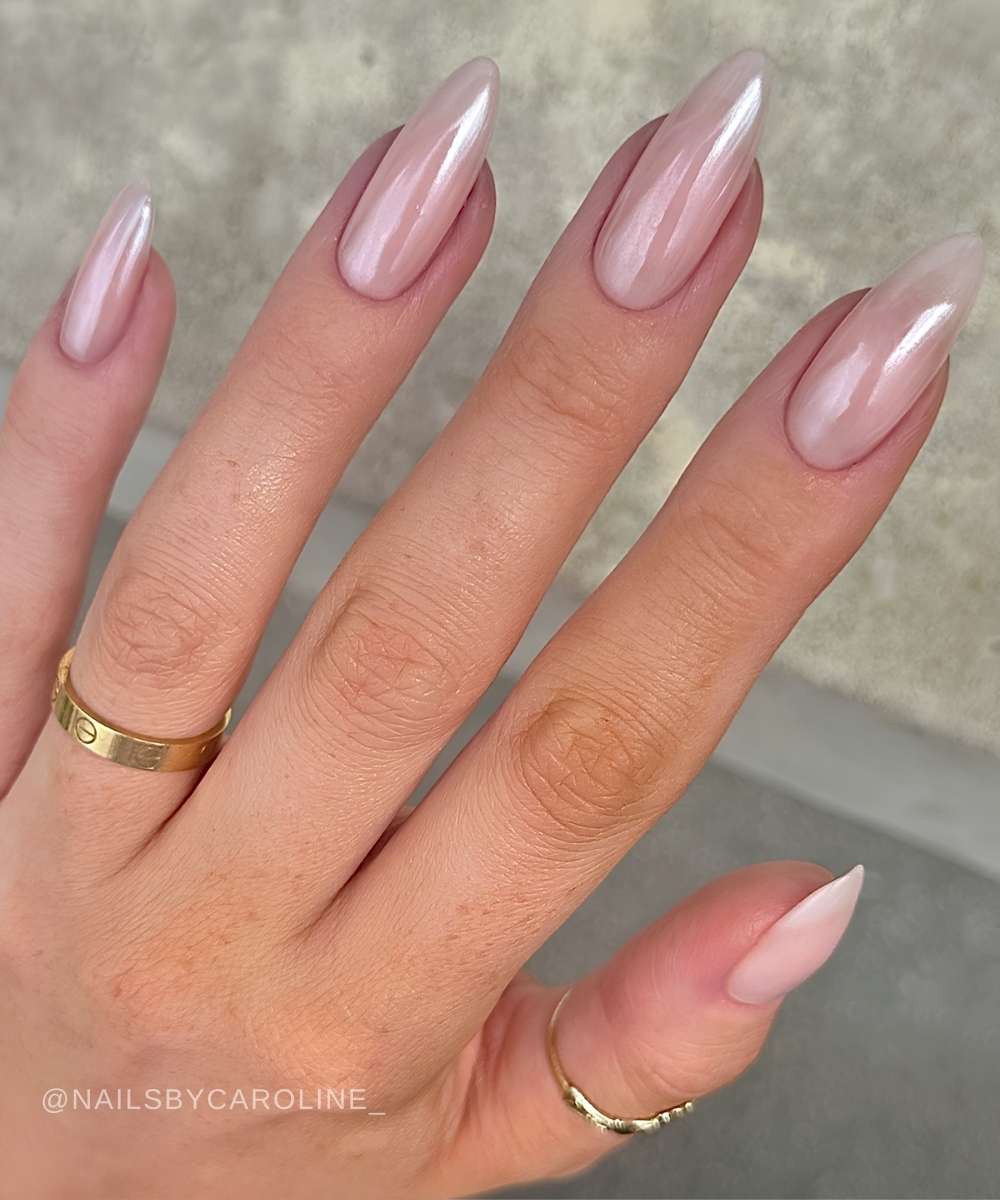
Regular polish will not give you that burnished mirror effect, and anyone telling you otherwise is lying. But glazed neutral nails are extremely easy to fake.
- Base coat, then one or two thin layers of sheer white, blush, beige or nude.
- Once completely dry, paint a translucent pearl or glaze topper over the top.
- High-shine top coat to finish.
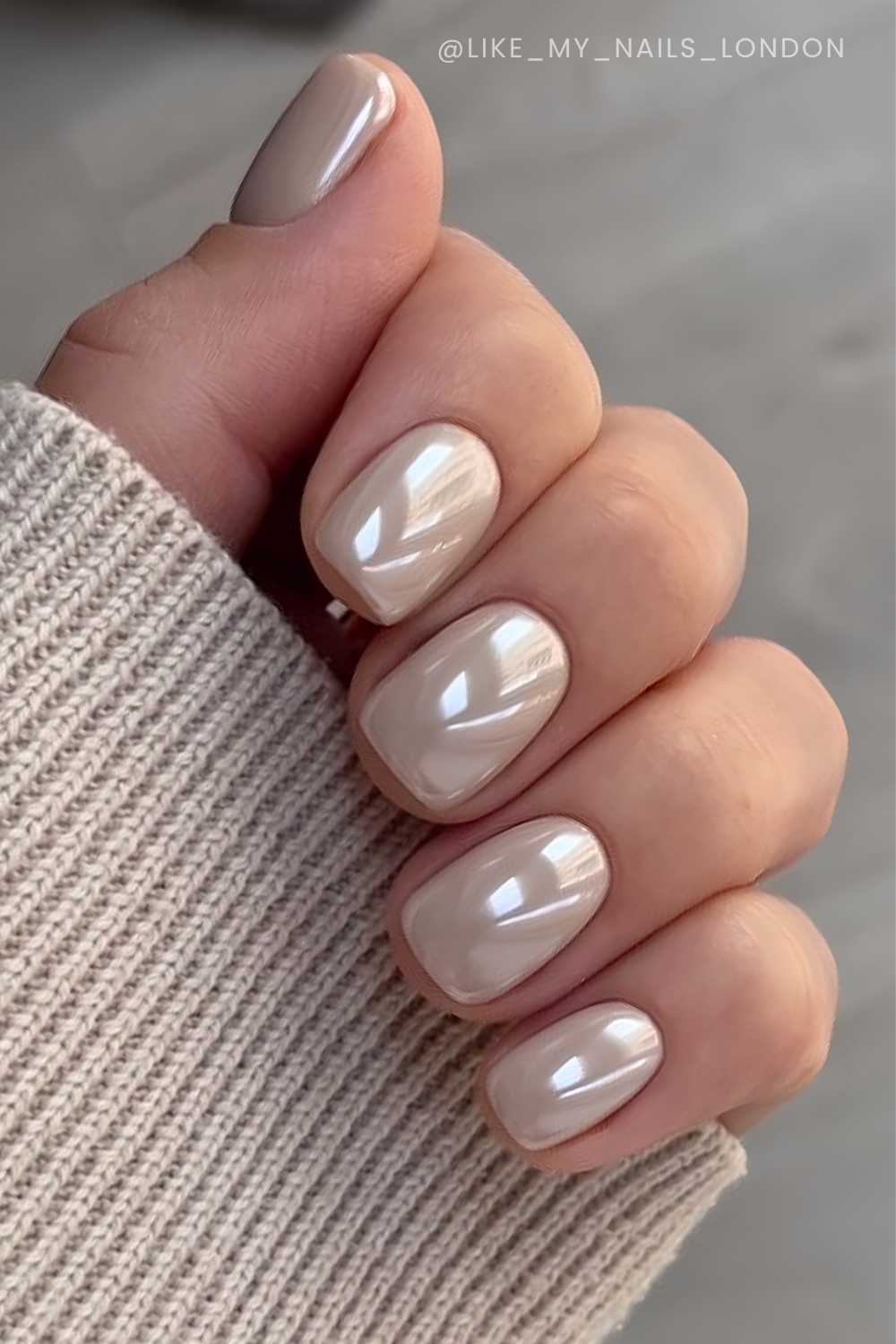
Full coverage is the easiest place to start, but definitely not where chrome ends. Once you have the technique down, try glazed French tips, negative-space accents, polka dots, floral details and other simple nail art.
A few things that actually matter
If you are using gel, do not guess your cure time. Chrome powders are dramatic about the surface underneath them and every gel system has its own rules.
Keep uncured gel off your skin as well. Repeated skin exposure to gel products can contribute to acrylate sensitization, so clean up any flooding around the cuticles before curing.
For removal, do not peel your gel off once it starts lifting. Break the top-coat seal and remove it according to your gel system’s instructions instead.
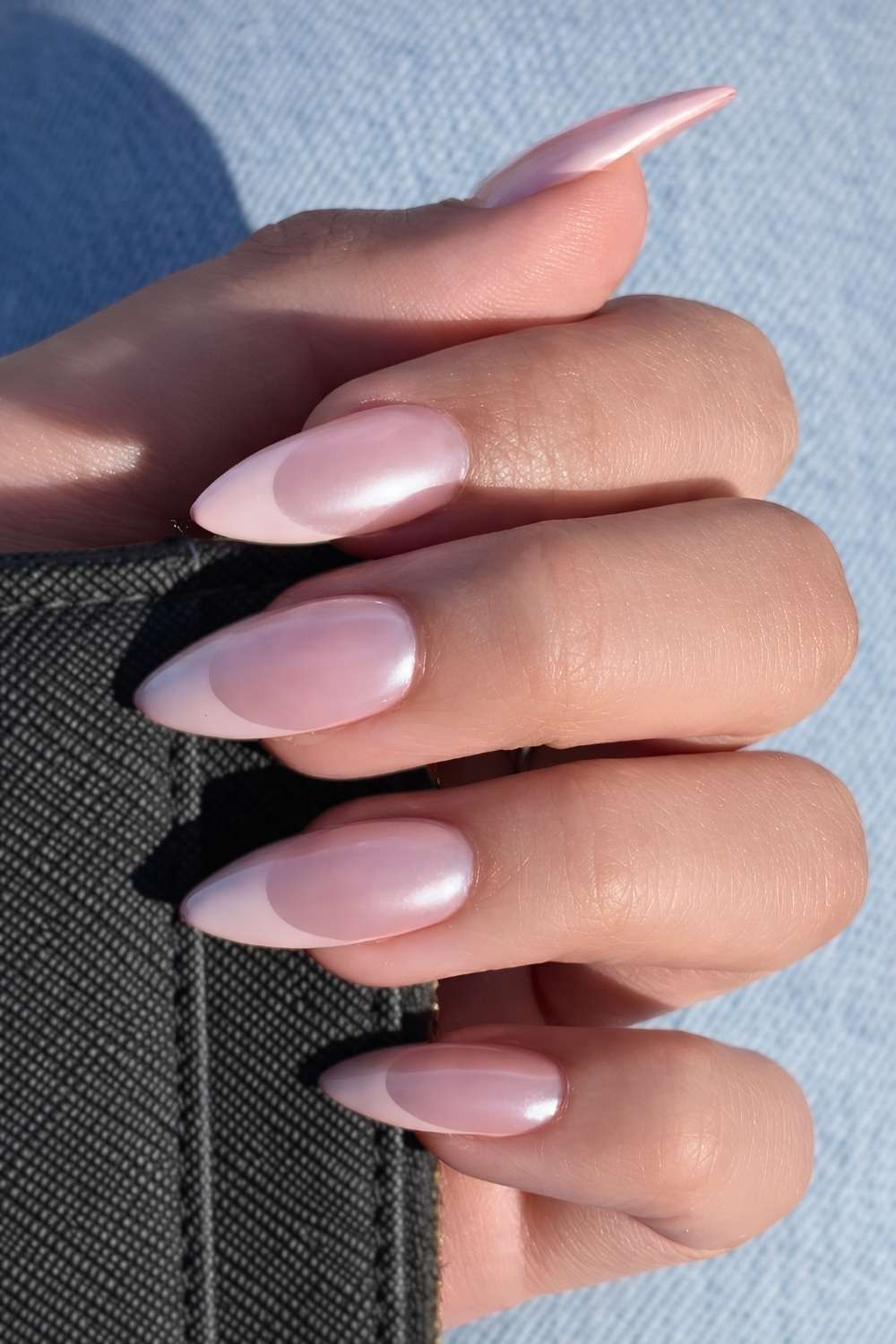
And if the chrome starts chipping around the tips after three days, the powder probably was not sealed properly around the free edge.
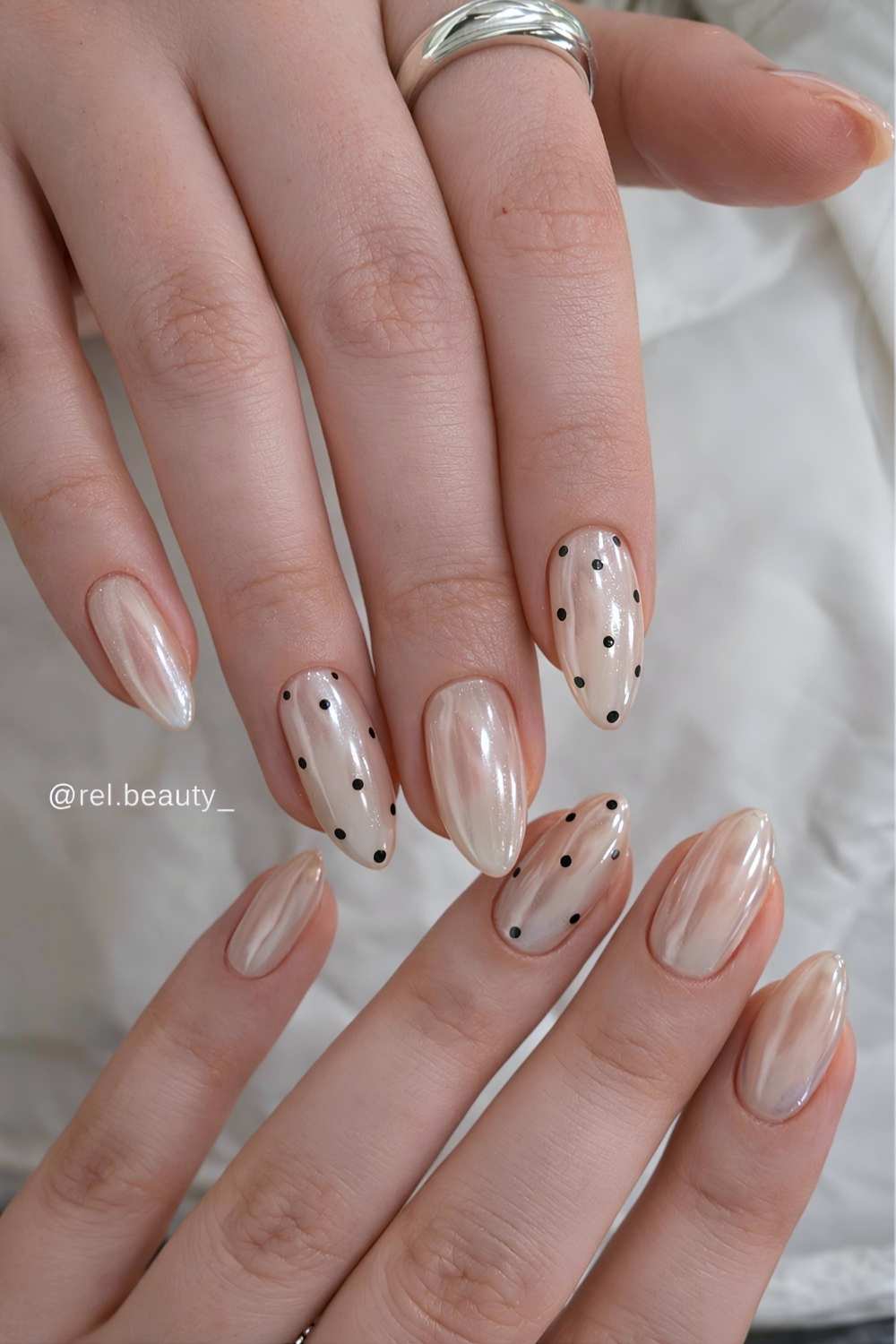
Now go pick your neutral, commit to the powder, and report back. Which shade family are you doing first? Tell me in the comments, and send this to whoever keeps asking how you got your nails to do that.