Baroque Nails Are Bringing Gilded Excess Back for 2026
Follow The Pink Issue on Google.
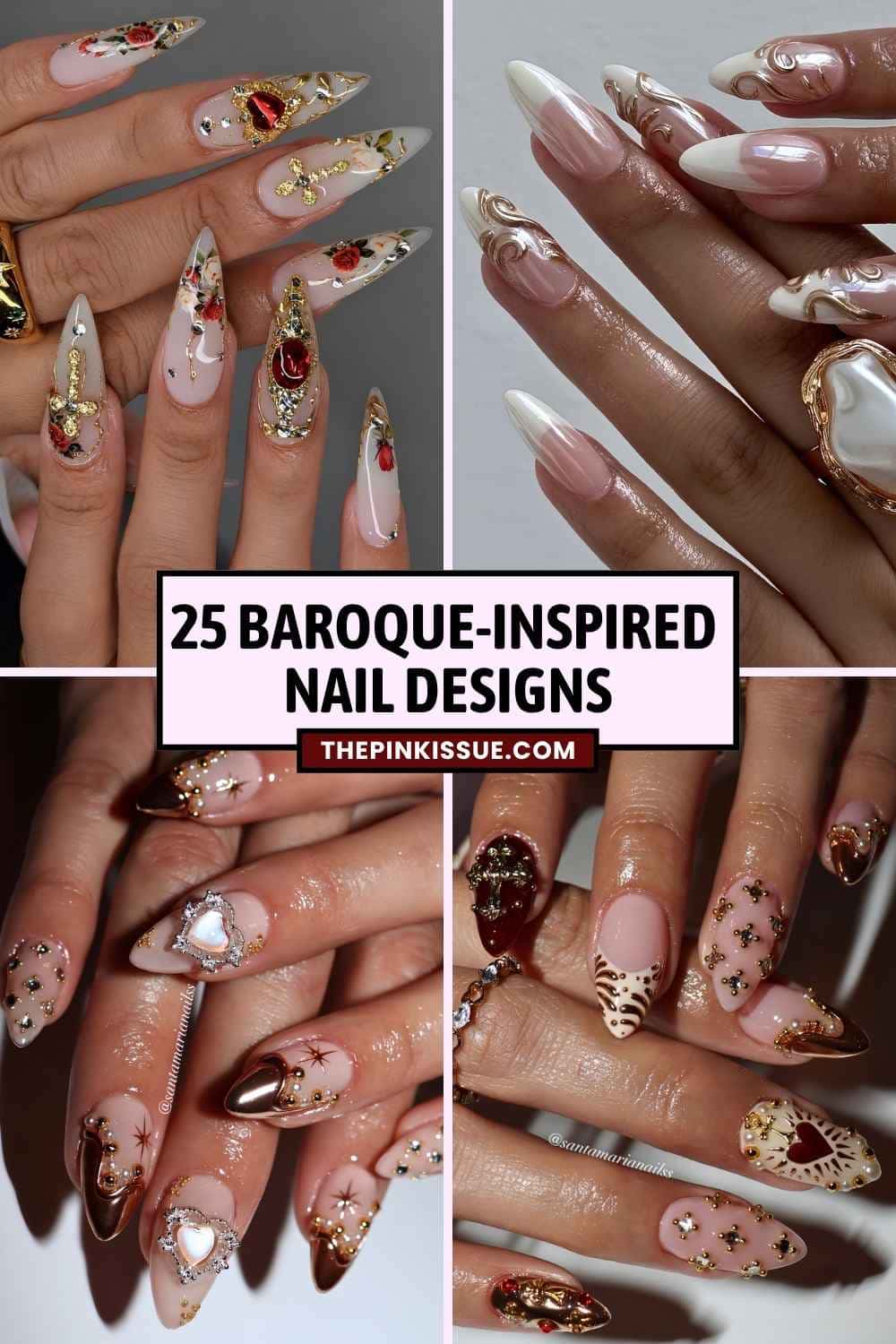
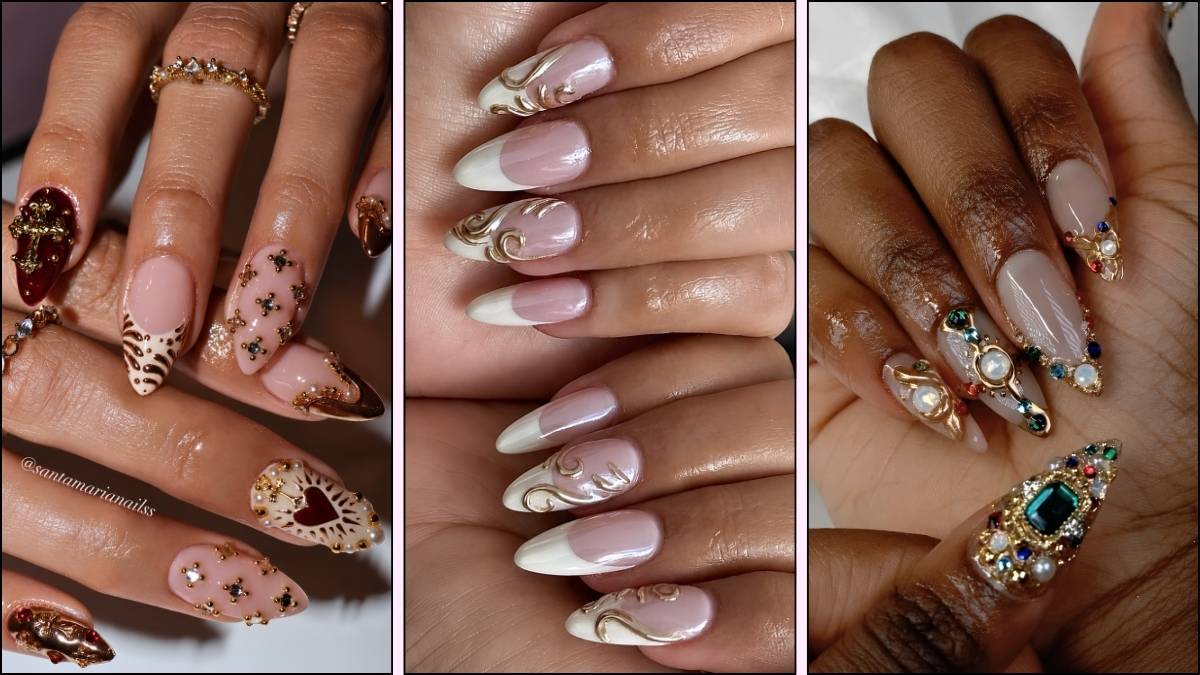
2026 looked at a standard gold French and asked: okay, but where are the scrolls, pearls and jeweled frames? Baroque nails lean hard into ornament, from raised metallic filigree and dramatic gems to simpler gold curls over a sheer base. Ahead, we’re breaking down what counts as Baroque, how the trend shows up in 2026 and 20 looks to save for your next appointment.
So, what actually counts as Baroque nail art?
The original Baroque style dominated much of European art, architecture and decorative design during the 17th and early 18th centuries. Subtle was not exactly the brief. Think gilding, dramatic curves, carved ornament, rich materials, elaborate framing and decoration layered on top of more decoration.
On nails, that translates surprisingly well.
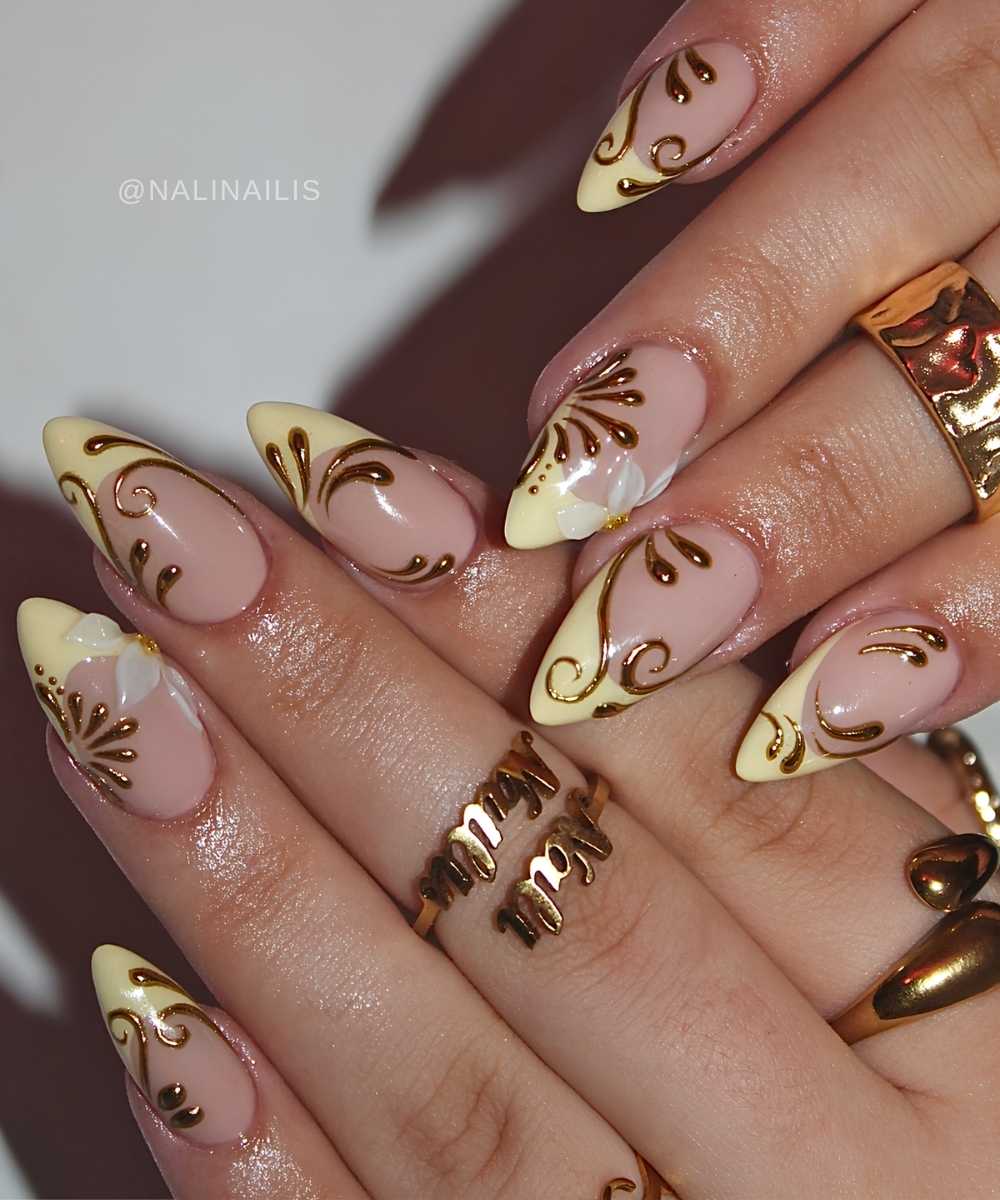
The biggest giveaway is ornamental movement. C- and S-shaped scrolls curl around the nail, raised metallic lines create decorative borders, and motifs often look more like carved furniture, gilded frames or vintage jewelry than regular nail art.
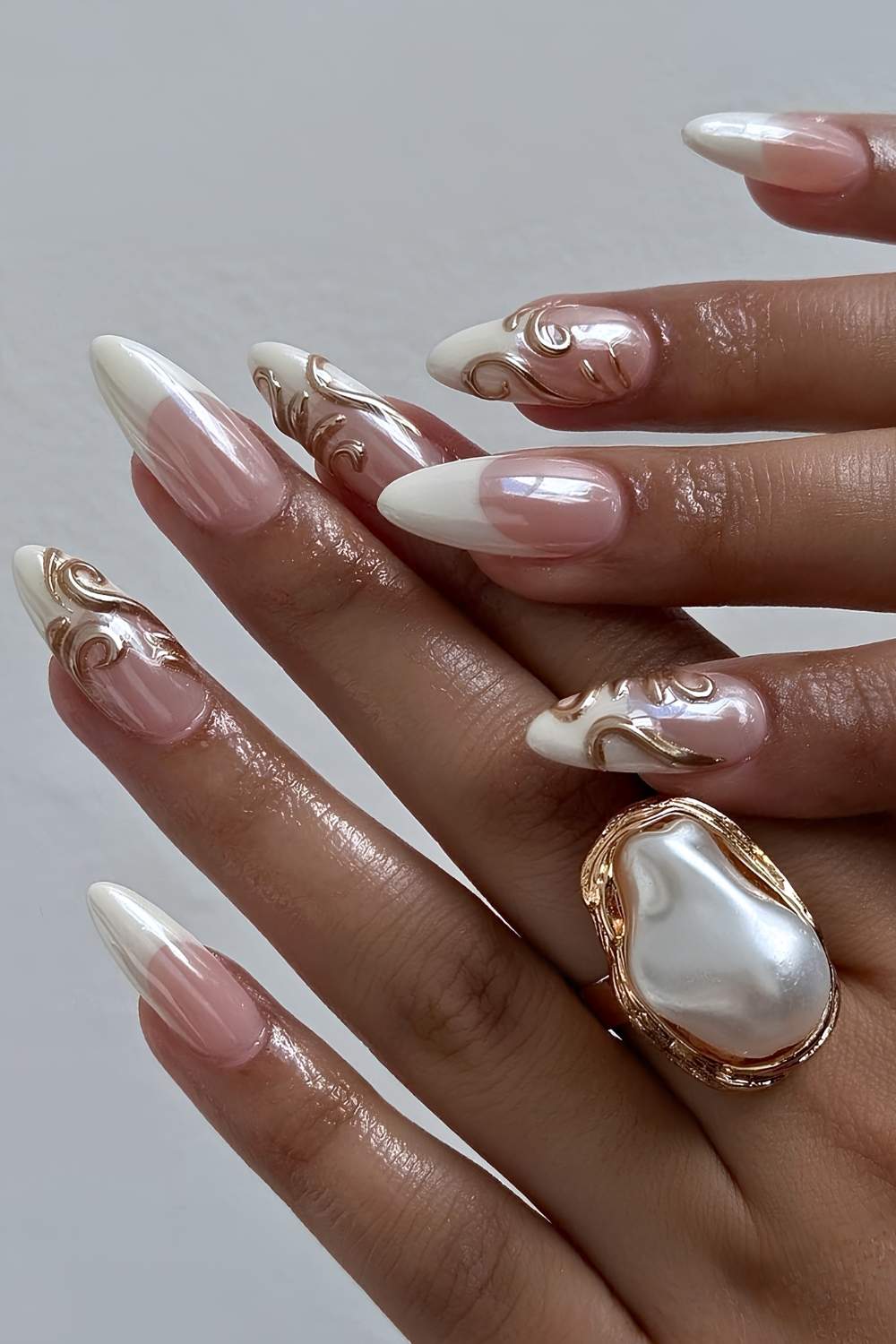
Gold is everywhere, obviously, but gold chrome alone does not make something Baroque. The important part is what the gold is doing. It might form scrollwork, filigree, acanthus-like leaves, shell shapes, fan motifs, ornamental borders or cartouche-style frames around gemstones and painted details.

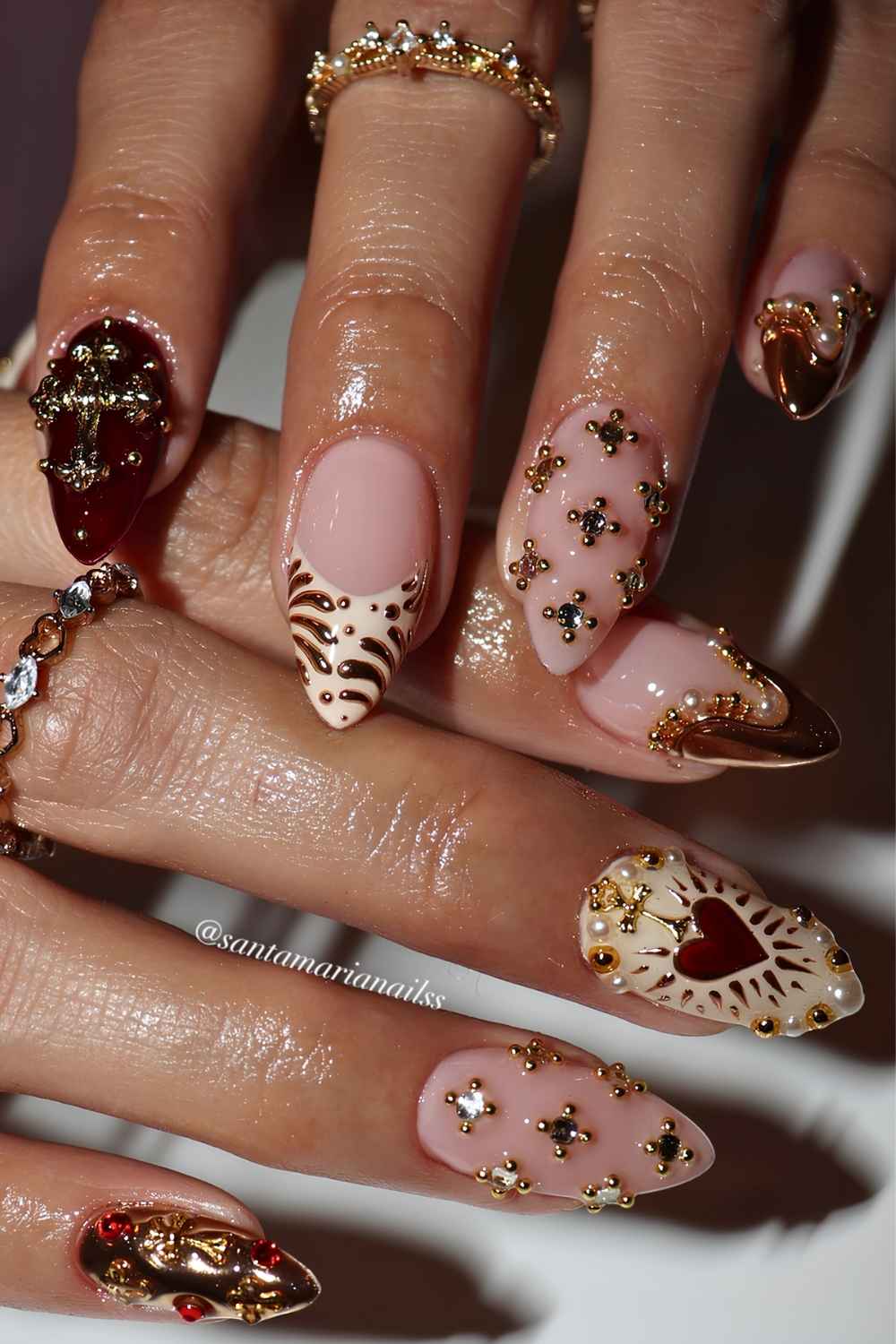
Painterly floral art and miniature portrait details also show up frequently, along with cameos, cherubs and devotional imagery. Sacred Heart motifs are a particularly strong reference, usually rendered as red jeweled hearts surrounded by gold rays, scrollwork, crosses or pearl detailing.
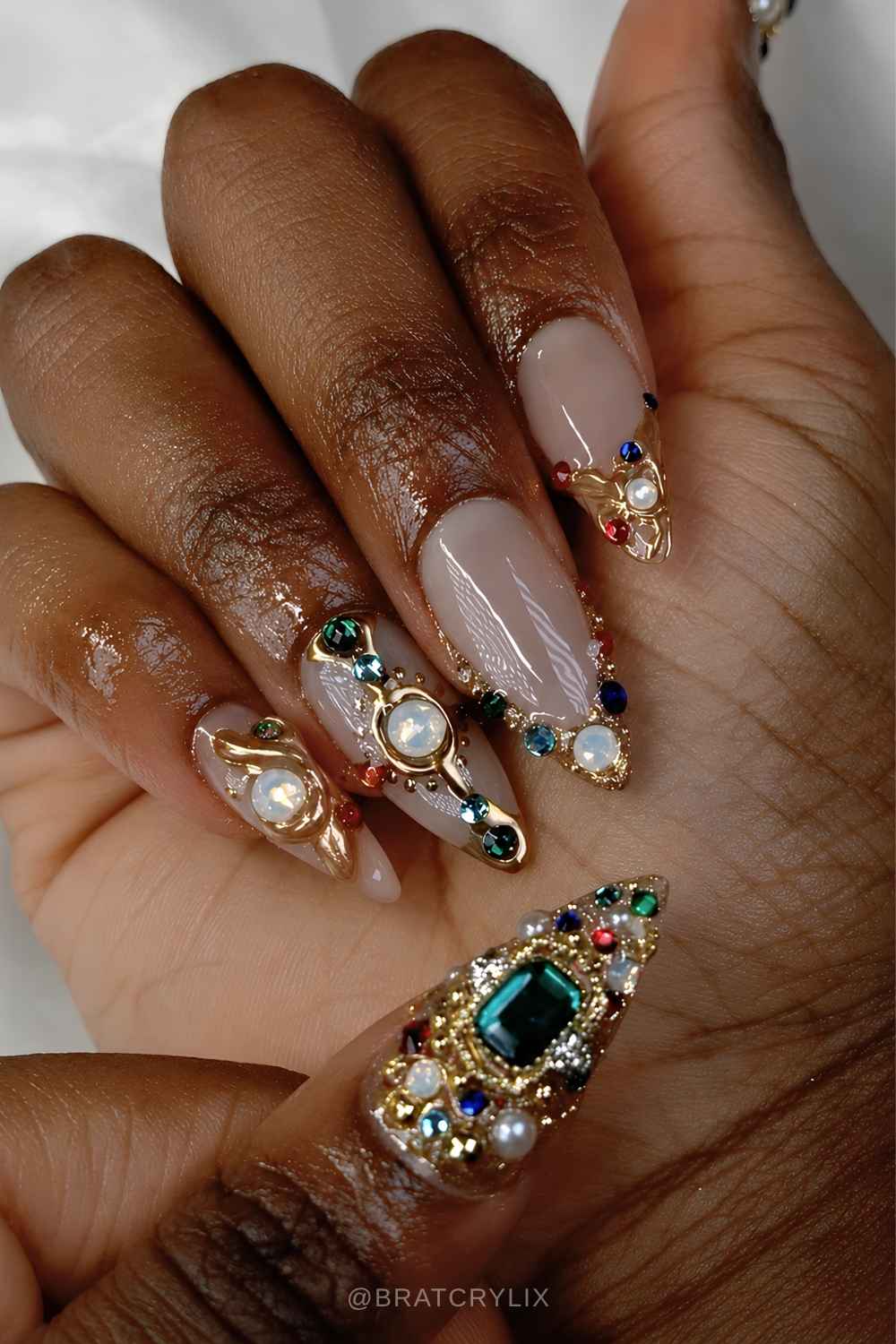
Pearls, cabochons, rhinestones and antique-looking charms add another layer, especially when they are actually built into decorative settings.
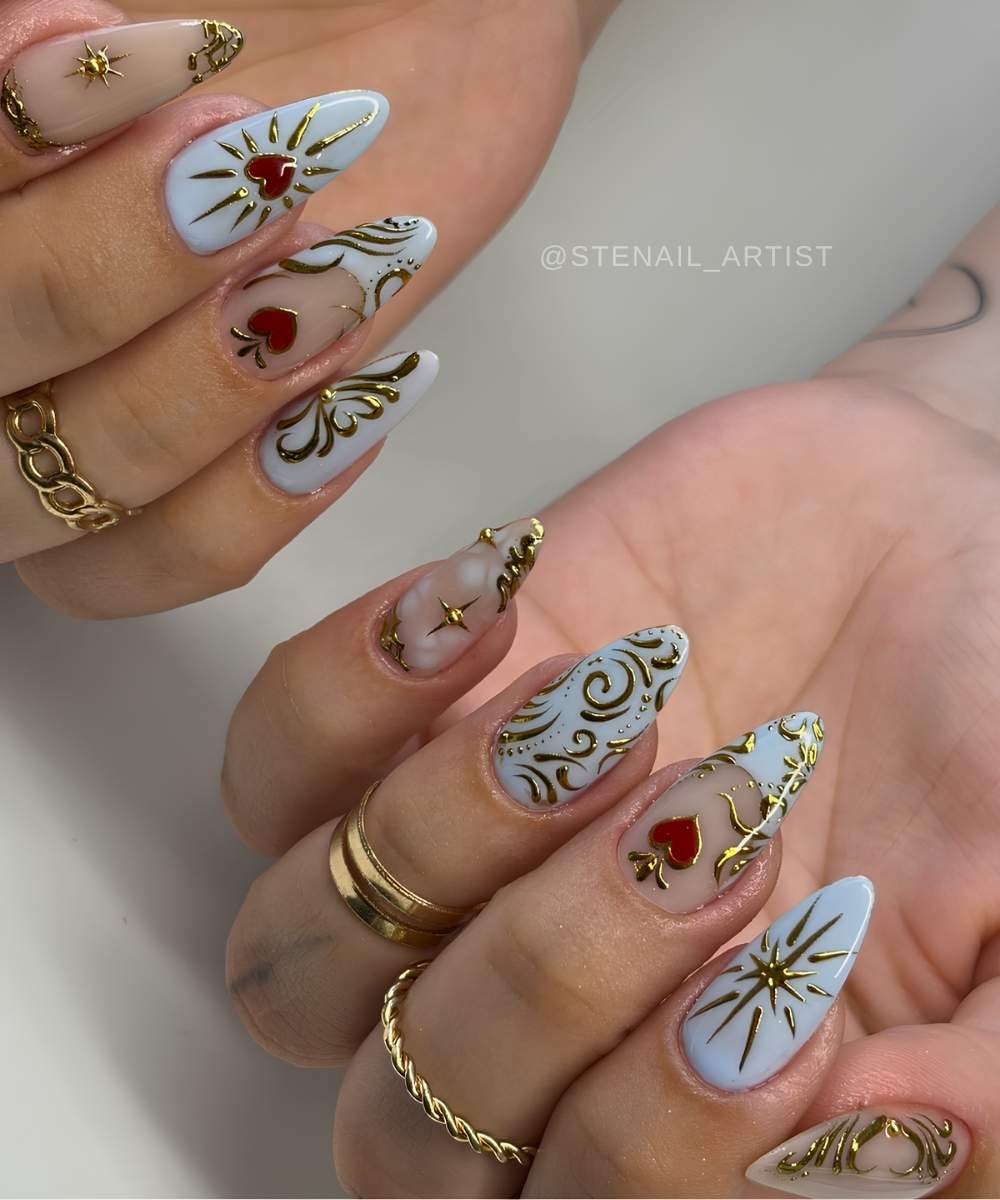
That last part matters. A random rhinestone sitting on a nail is just a rhinestone. A ruby-colored stone surrounded by raised gold scrolls, pearls and a decorative frame? Now we're getting somewhere.
And then there's Rococo
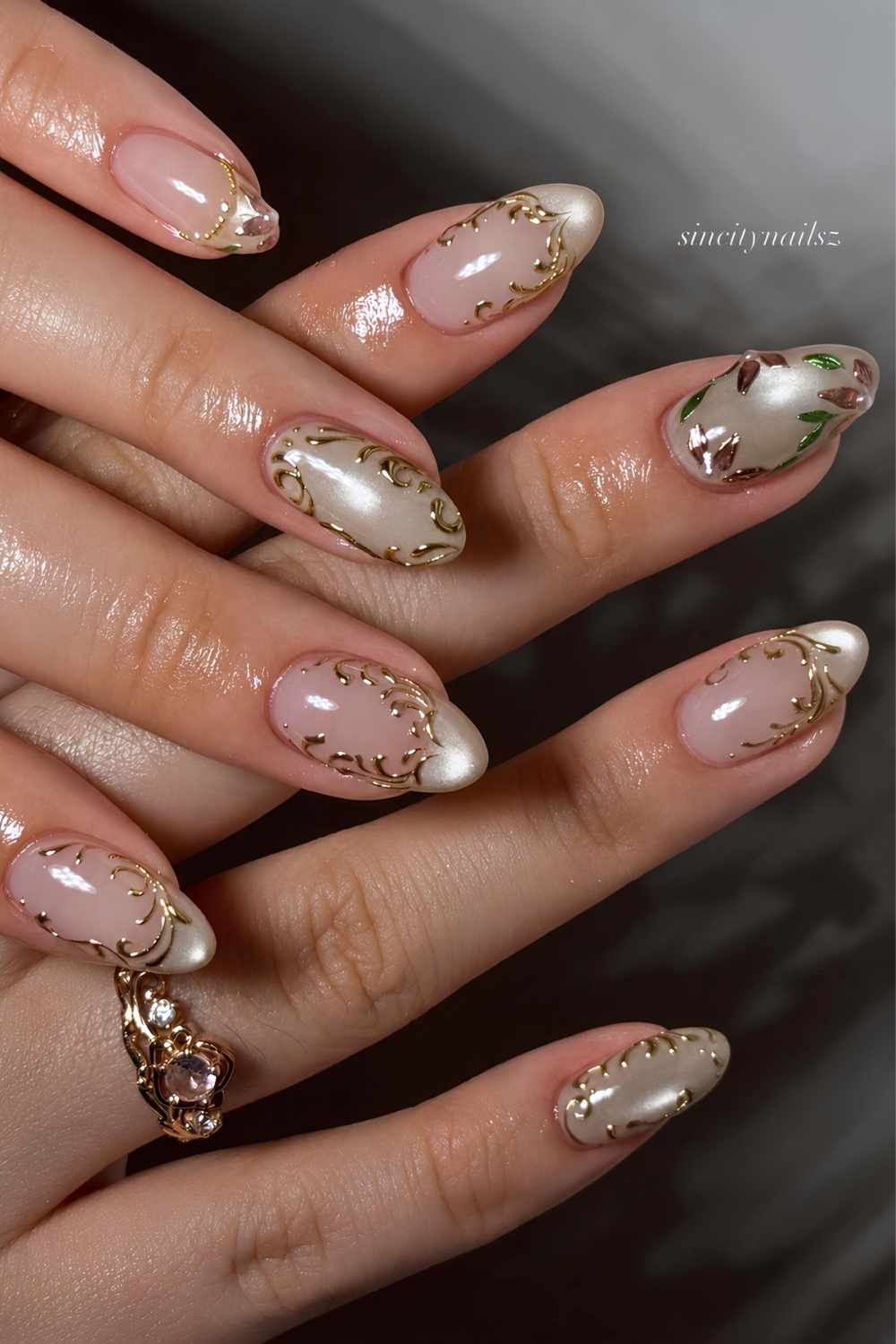
A lot of manicures being grouped under the Baroque nail trend are technically closer to Rococo, the lighter decorative style that followed Baroque in the 18th century.
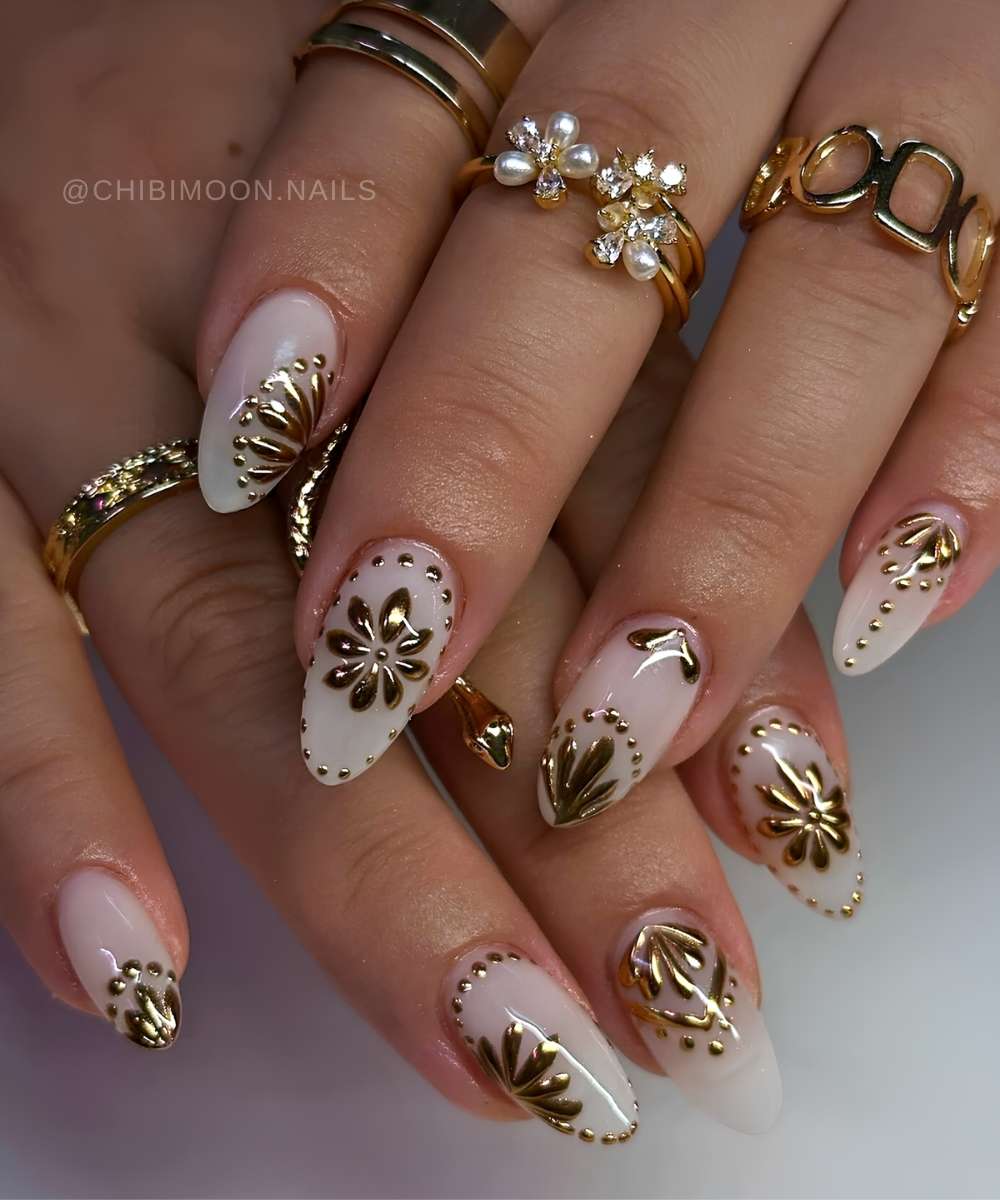
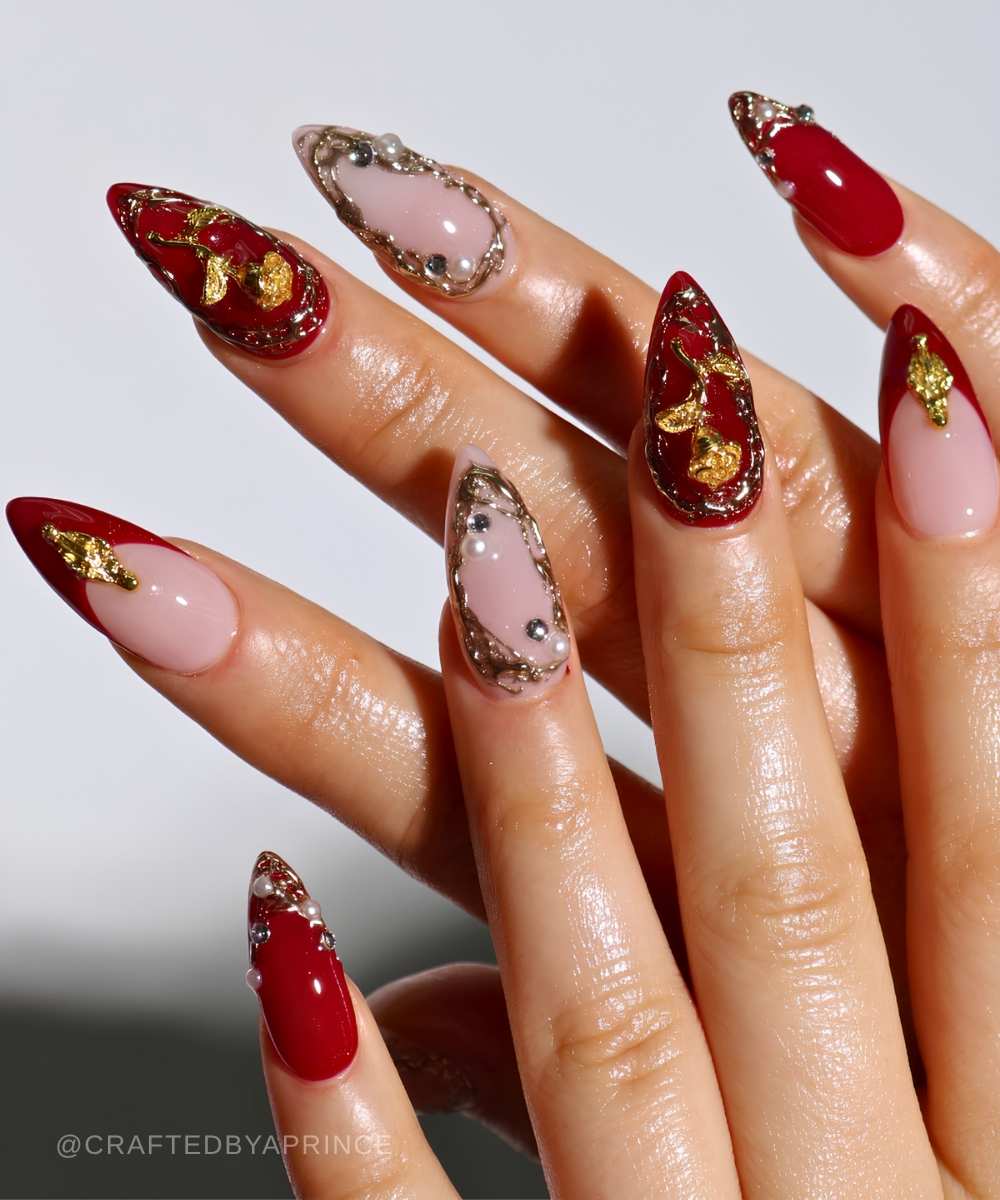
The distinction is pretty easy to spot once you know it. Baroque tends to feel heavier and more dramatic: deep reds, black, gold, chunky ornament, religious-jewelry references and serious gemstones.
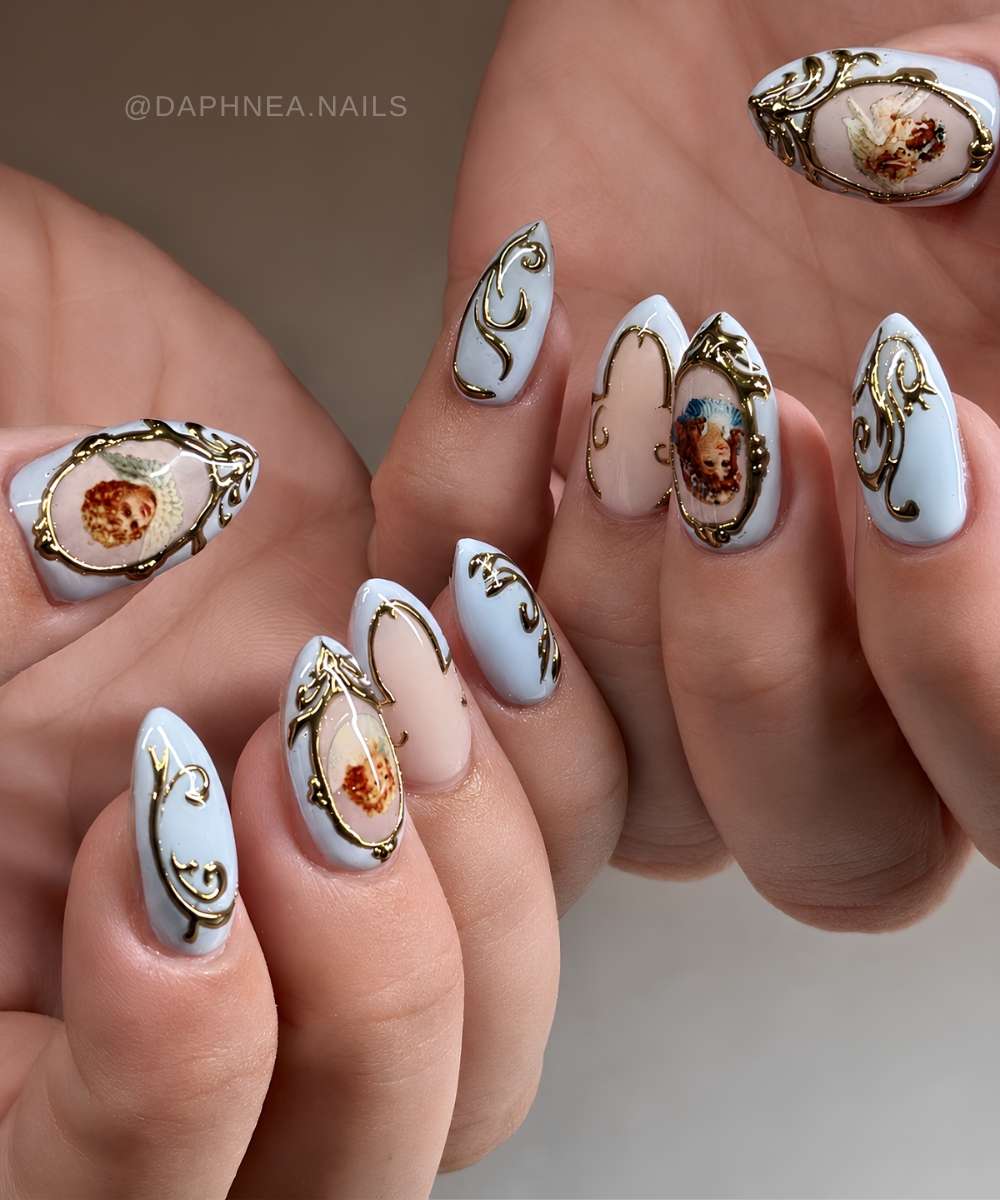
Rococo keeps the curls and ornament but makes everything lighter and prettier. Powder blue, blush pink, ivory, tiny florals, shells, pearls, asymmetrical scrollwork and miniature painted scenes all push a manicure in that direction.
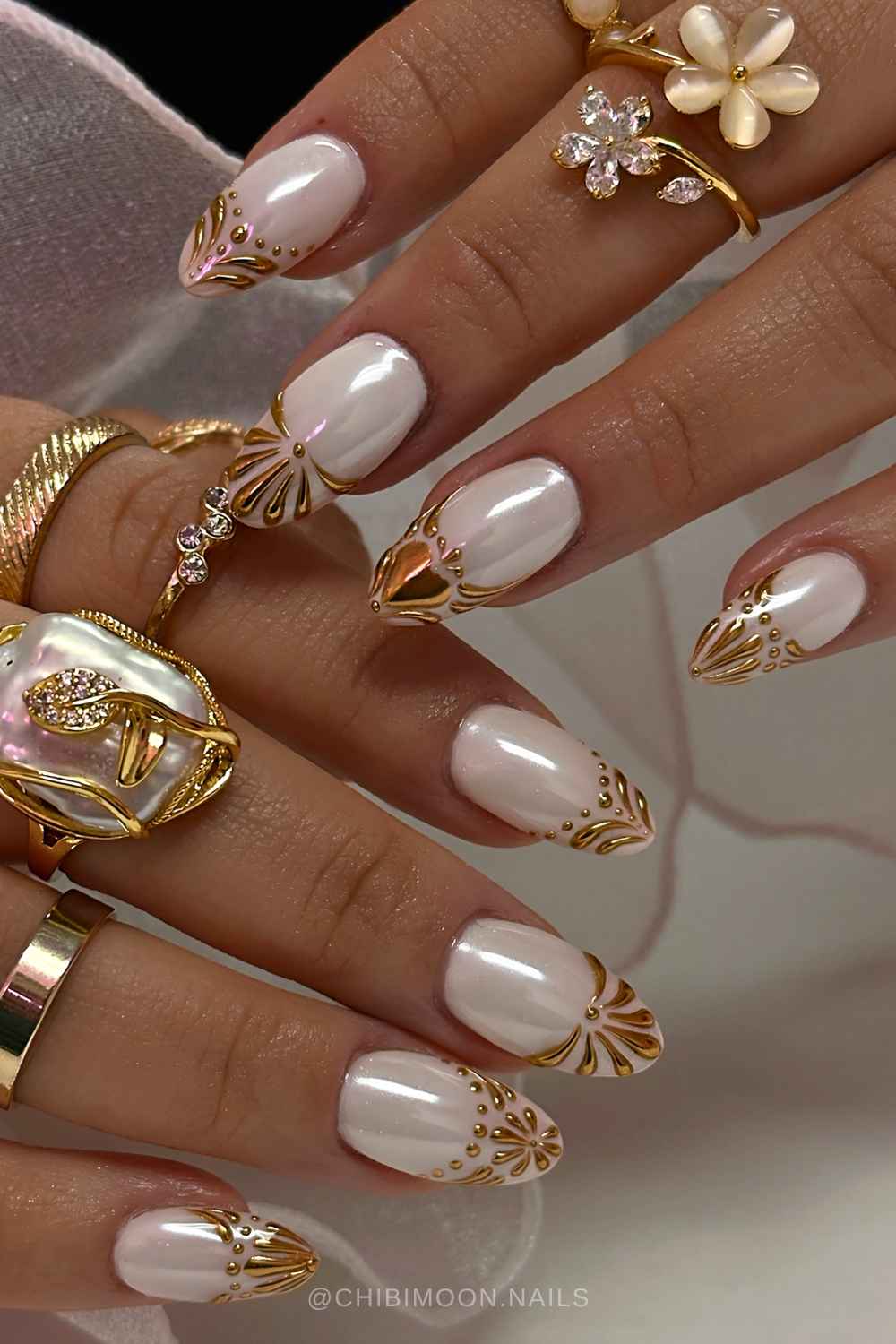
Then there’s Art Nouveau, which shows up in the more fluid side of the trend: long botanical lines, curling stems, petals and gold details that feel more organic than architectural.
Current nail art happily steals from all three, so I’m not calling the historical accuracy police every time a pastel blue manicure gets tagged #baroquenails.
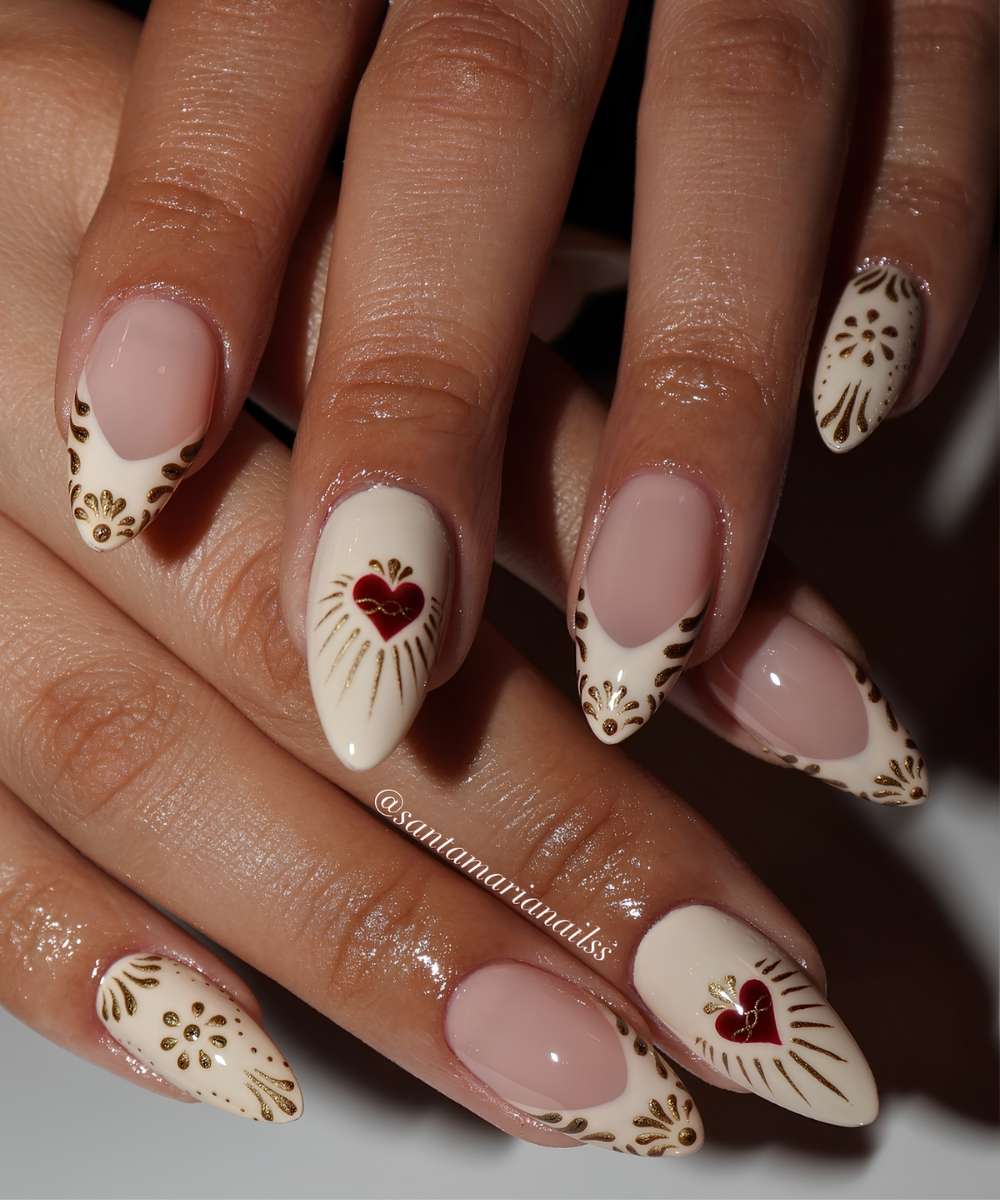
The 2026 version is less about recreating one exact period and more about borrowing from the whole decorative universe around it: gilded interiors, antique jewelry, porcelain, ornate frames, florals, scrollwork and historical design motifs.
The Baroque nail trend has a few different personalities
The most dramatic version is basically antique jewelry for your fingertips.
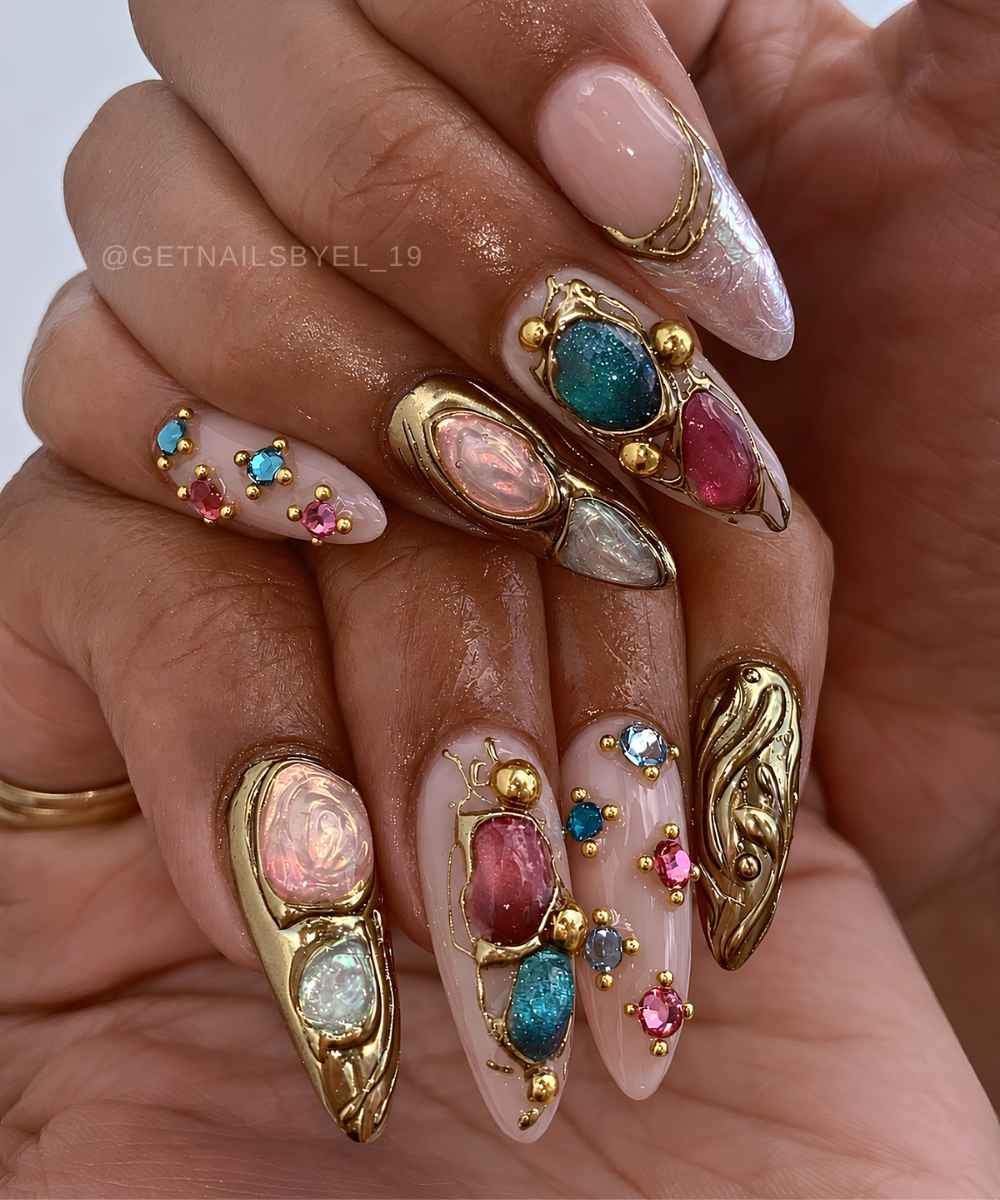
These sets use large ruby, emerald, sapphire or opal-like stones surrounded by sculpted gold. Pearls sit inside elaborate frames. Cabochons look mounted rather than simply glued down. Some designs resemble tiny brooches, reliquaries or jeweled pendants.
The easiest test I've found is this: the decoration has architecture.
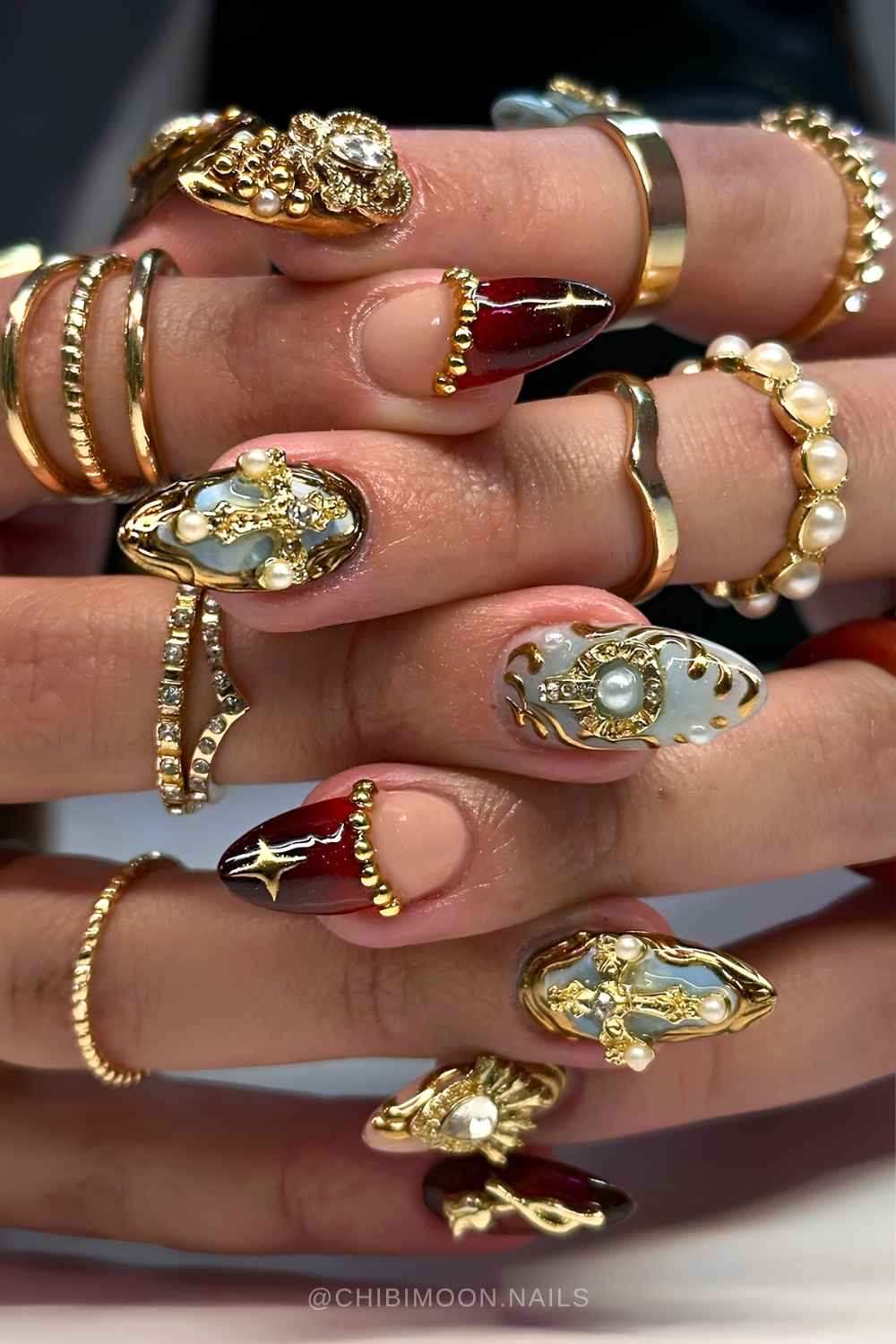
The gems are framed. The pearls belong to a larger motif. Gold creates borders and structures around everything. There is a clear composition rather than a handful of charms scattered across the nail.
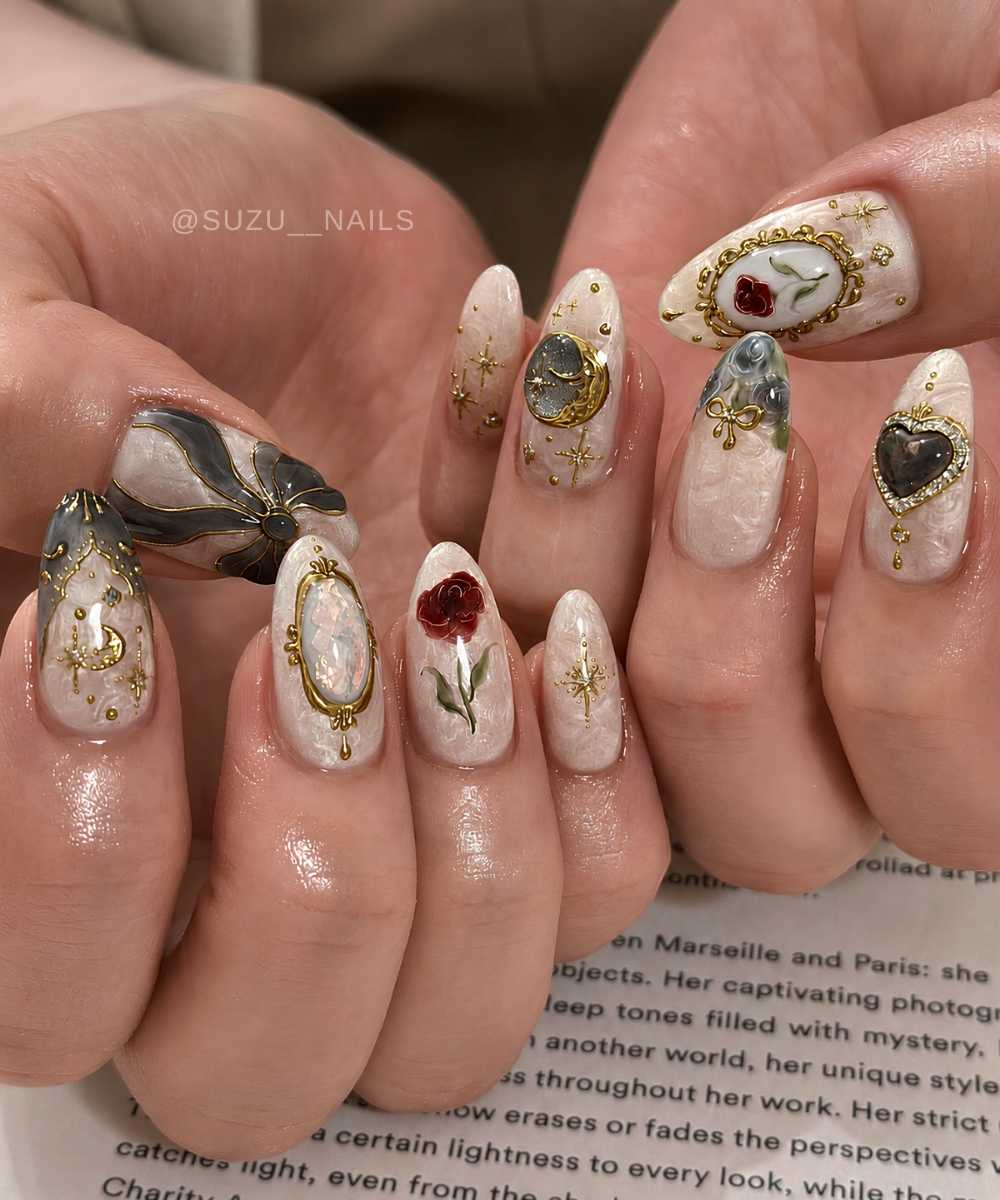
Then there's the Rococo porcelain version, which swaps the heavy jewel tones for pale blue, cream, pink and soft green. Tiny roses, painted florals and miniature portrait-style details sit inside curling gold frames.
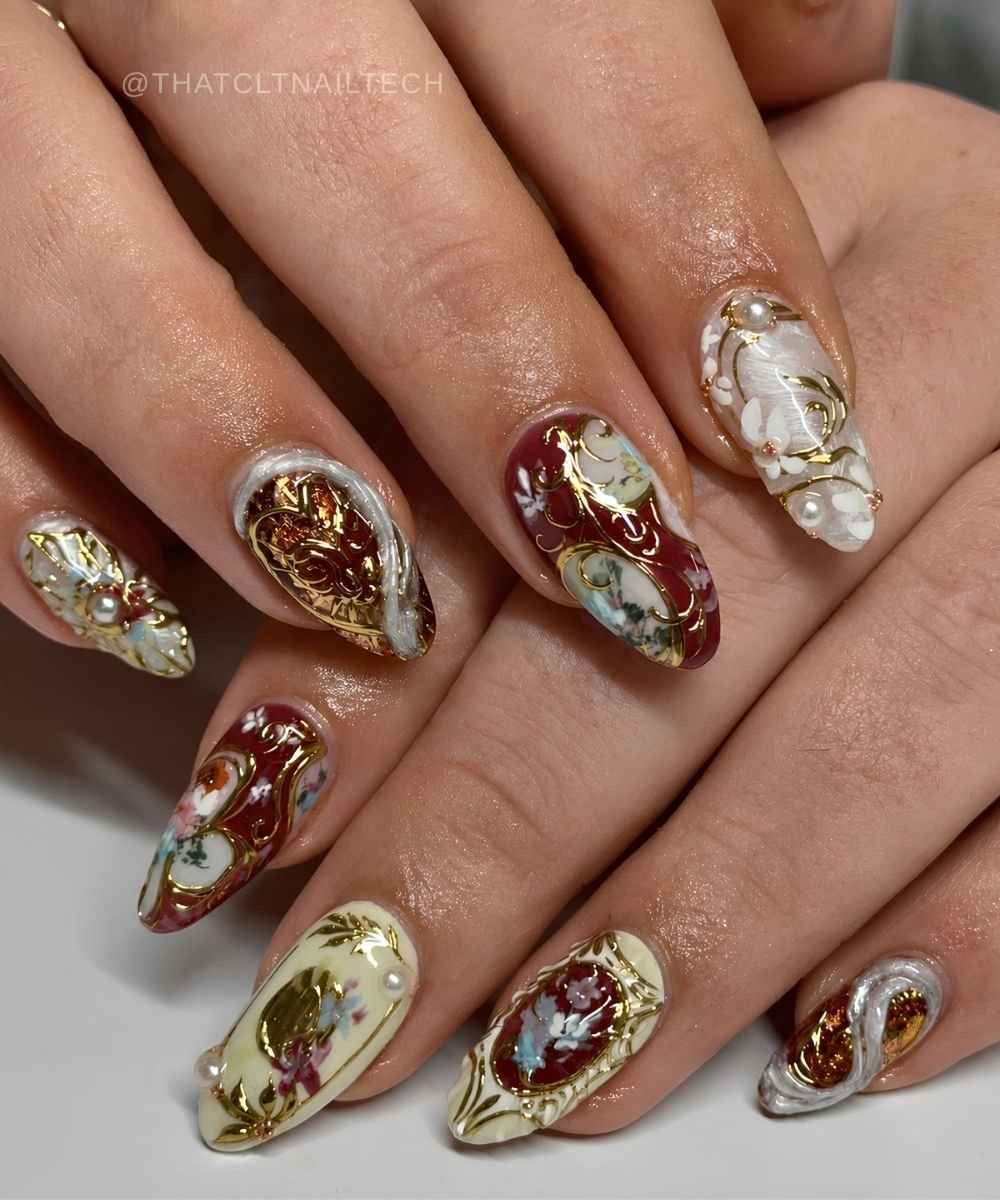
And finally, there’s the version I expect more people to actually wear: milky nails or a sheer base with gold French tips, finished with raised scrollwork. A few sculpted C-curves around the tip or sidewall are enough to sell the Baroque reference without turning every nail into a tiny gilded relic.
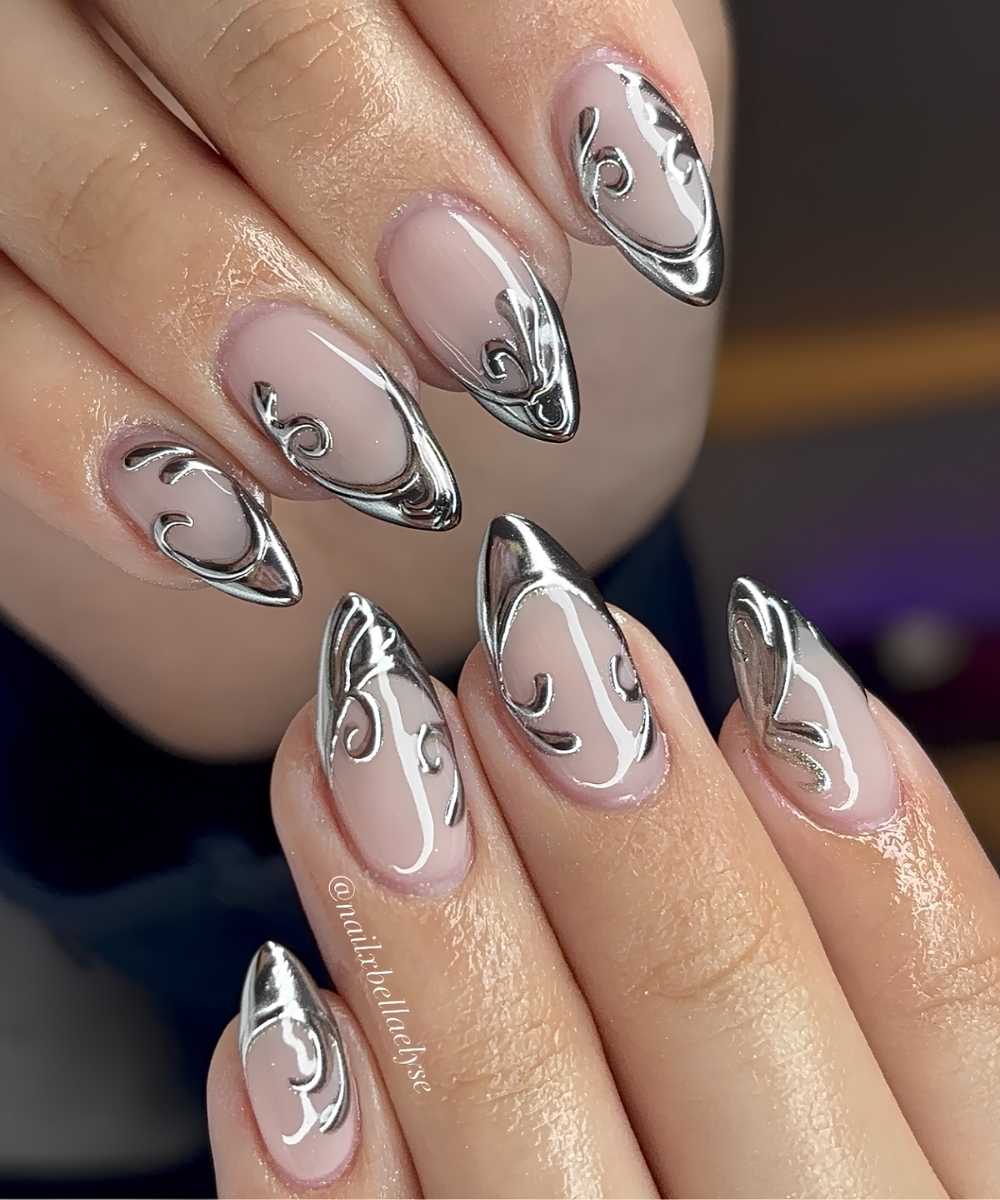
Silver chrome takes it in a more futuristic direction. That offshoot is often called cyber Baroque, where the same filigree, raised gel and ornate 3D scrollwork get an icy metallic finish.
The easiest ways to DIY baroque nails
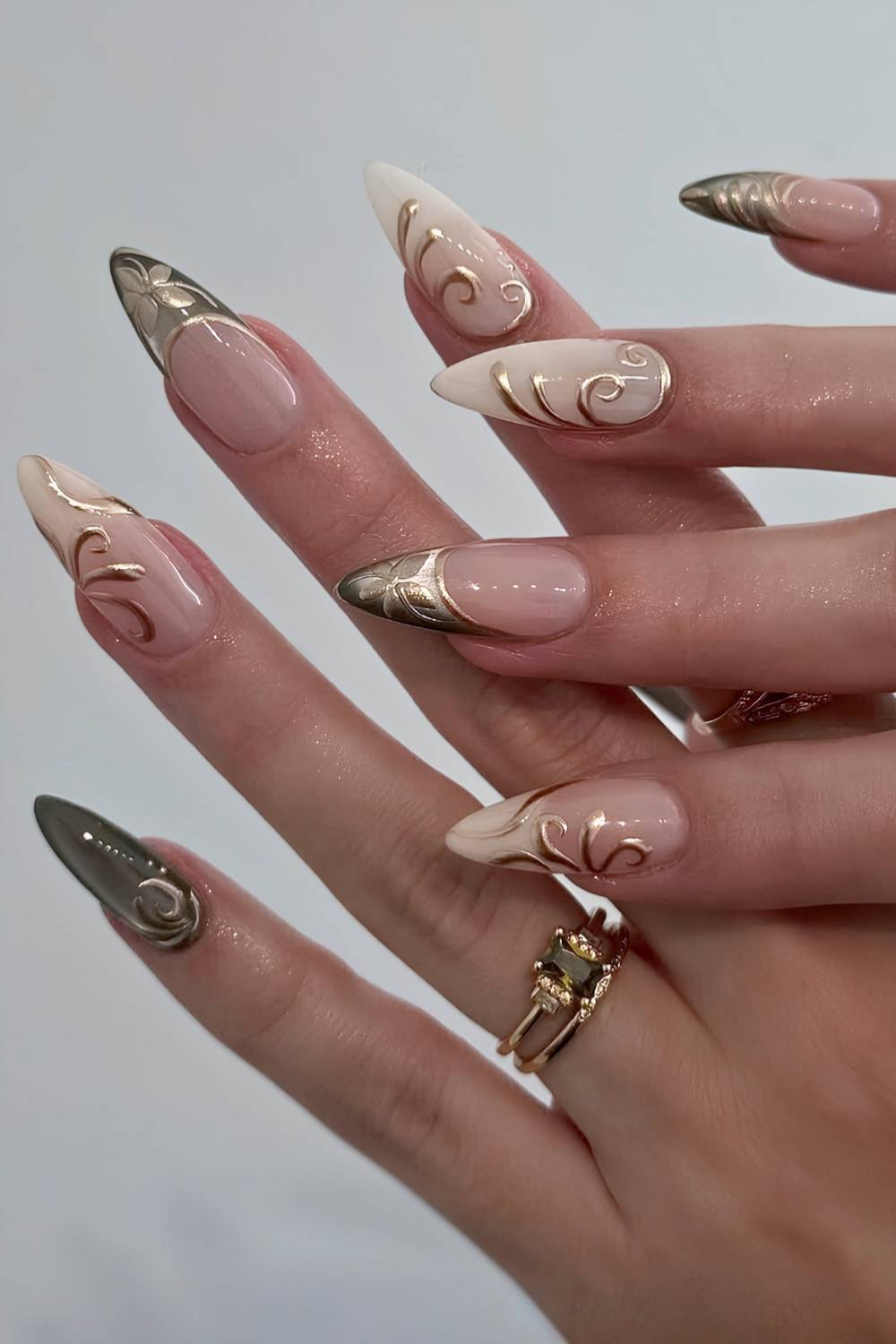
Start with raised chrome scrolls. Apply a sheer pink, nude, cream or pale blue base. Use thick 3D or builder gel and a fine liner brush to draw simple C- and S-curves. Cure them, rub gold chrome powder over the raised design and seal everything properly. Two or three curls around the tip already read ornamental.
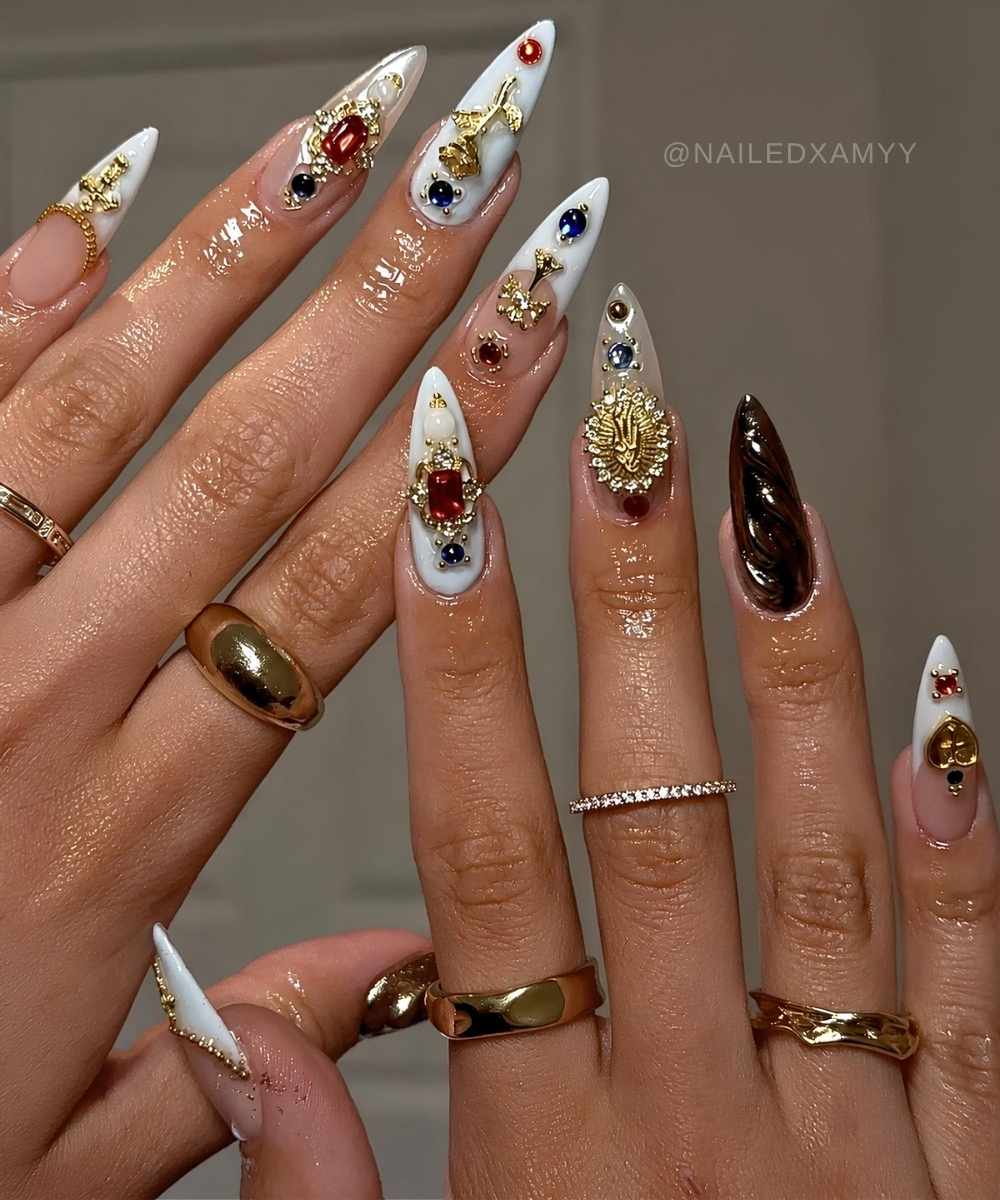
Fake the antique jewelry. Use small cabochons, pearls or vintage-style nail charms and surround them with tiny gold beads or raised gel. Concentrating the decoration on one or two nails looks more convincing than scattering random rhinestones across all ten.
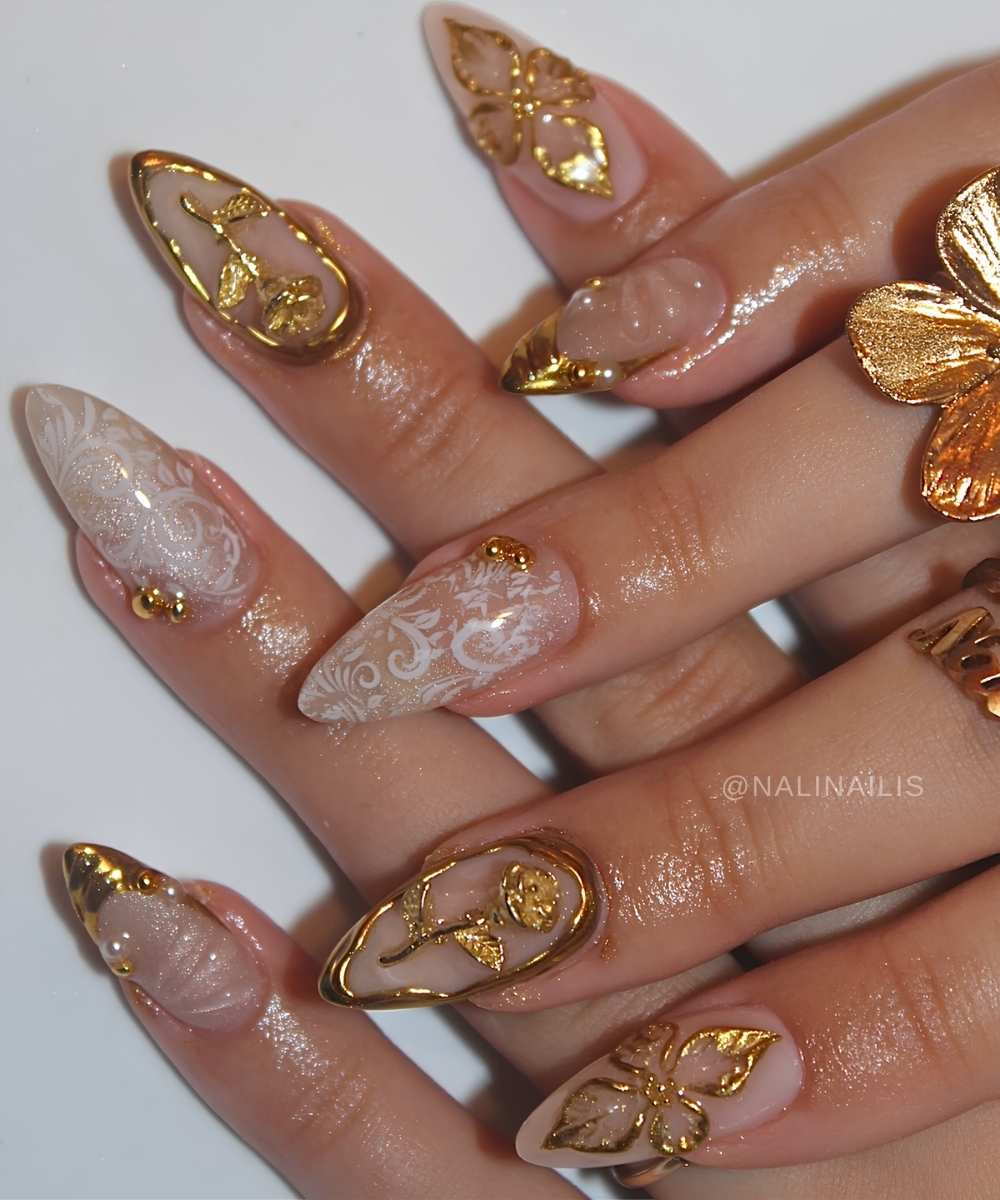
Use decals for the complicated part. Tiny roses, portrait decals or floral transfers can become instant Rococo art once you draw a raised gold oval or irregular frame around them. Try an ornamental French first. Paint a cream, burgundy or metallic French tip, then add a couple of gold flourishes extending upward from the edge.
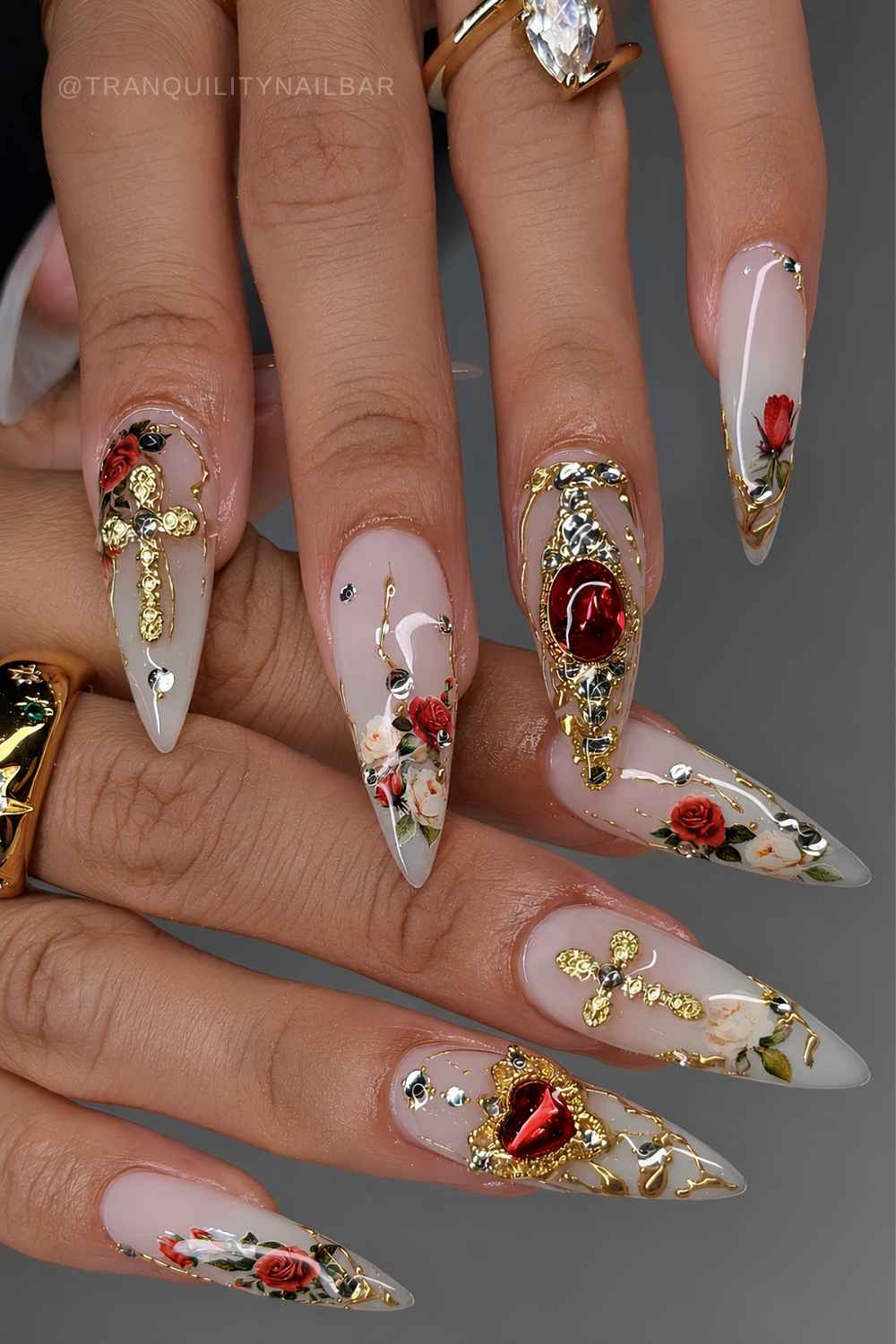
Stamping plates are your friend. Search for filigree, damask, Victorian scroll or ornamental patterns. You can isolate individual curls instead of transferring the entire design. Let one nail go completely feral. A large framed gem or pearl-heavy accent nail surrounded by simpler gold-detail nails still delivers the trend and requires approximately 80 percent less emotional commitment.
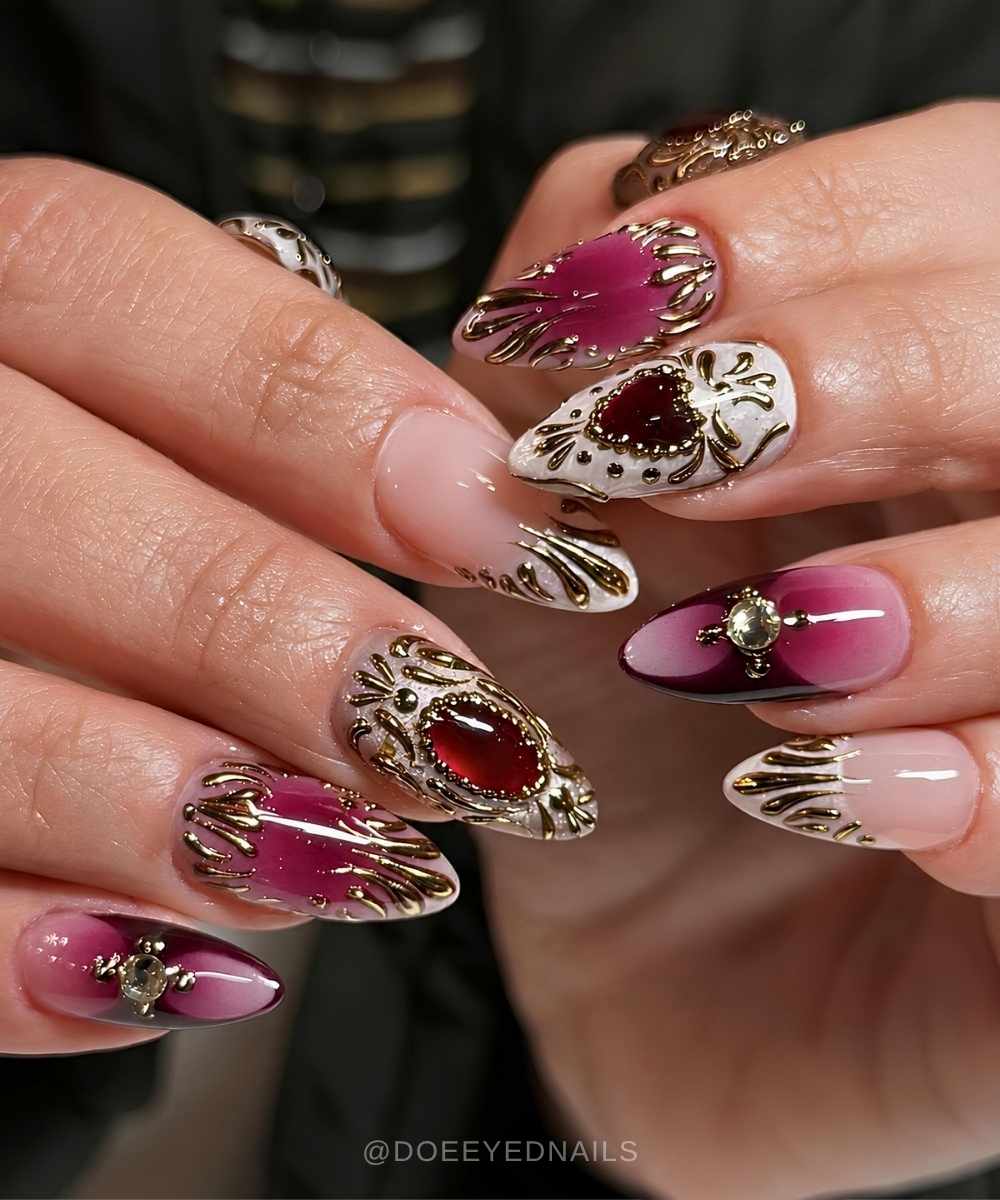
For raised gel work at home, keep uncured gel off your skin and cure products according to the manufacturer's instructions. Also use a proper gem or charm gel for heavier pieces rather than trusting one tragic dot of top coat with a giant cabochon.
The colors that work best
Gold with milky pink, nude and ivory is the easiest entry point and probably the most wearable.
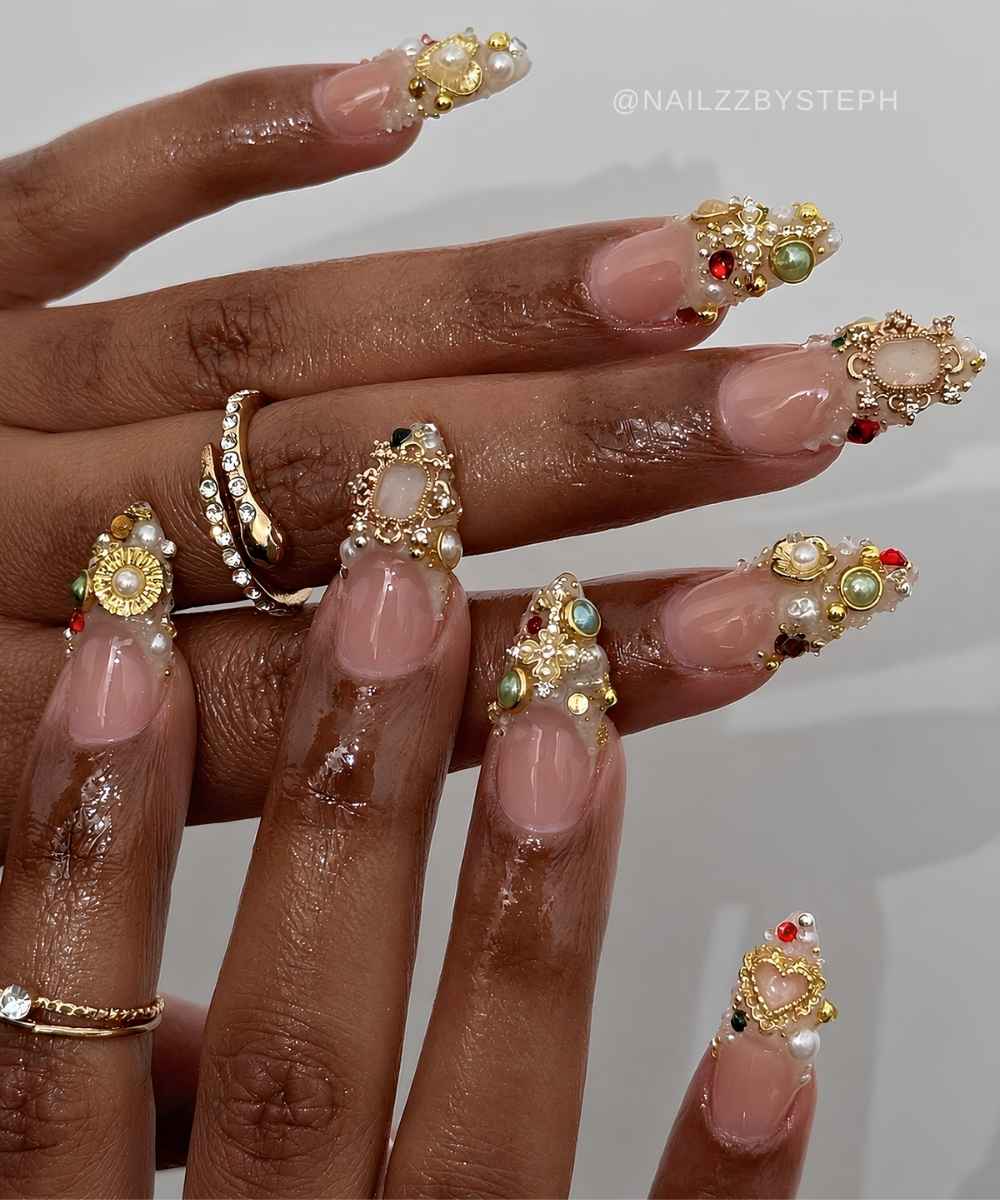
For a richer Baroque look, go for oxblood, burgundy, black, deep green, navy or jewel-toned cat-eye paired with warm gold. The Rococo side gets much softer: powder blue, blush, buttercream, sage and pearl white, usually finished with delicate florals and finer gold scrollwork.
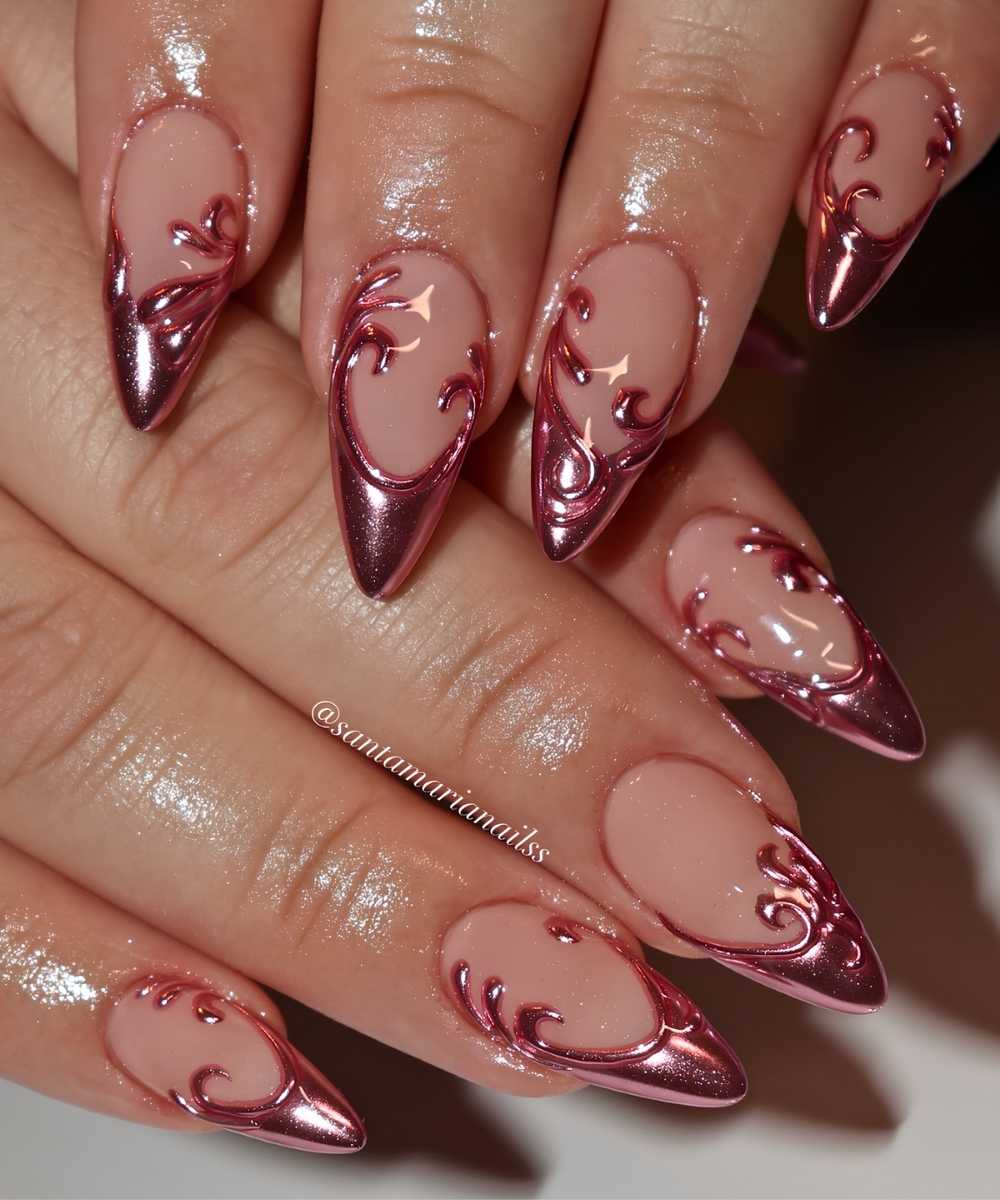
Metallic accents don’t have to stop at gold. Silver chrome pushes Baroque ornament into a more futuristic direction, while rose gold keeps it softer and more romantic.
The finish matters too. Glossy bases, chrome, pearl and cat-eye all suit the trend because they give the manicure depth. Flat color alone can make elaborate ornament feel strangely two-dimensional.
My verdict: More is more
After years of glazed finishes, simple French tips and ultra-clean nail art, I’m very ready for nails to get decorative again. Baroque nails pull together everything that’s been getting bigger lately - chrome, 3D gel, charms, pearls, antique-jewelry details and actual nail art you can see from more than six inches away.
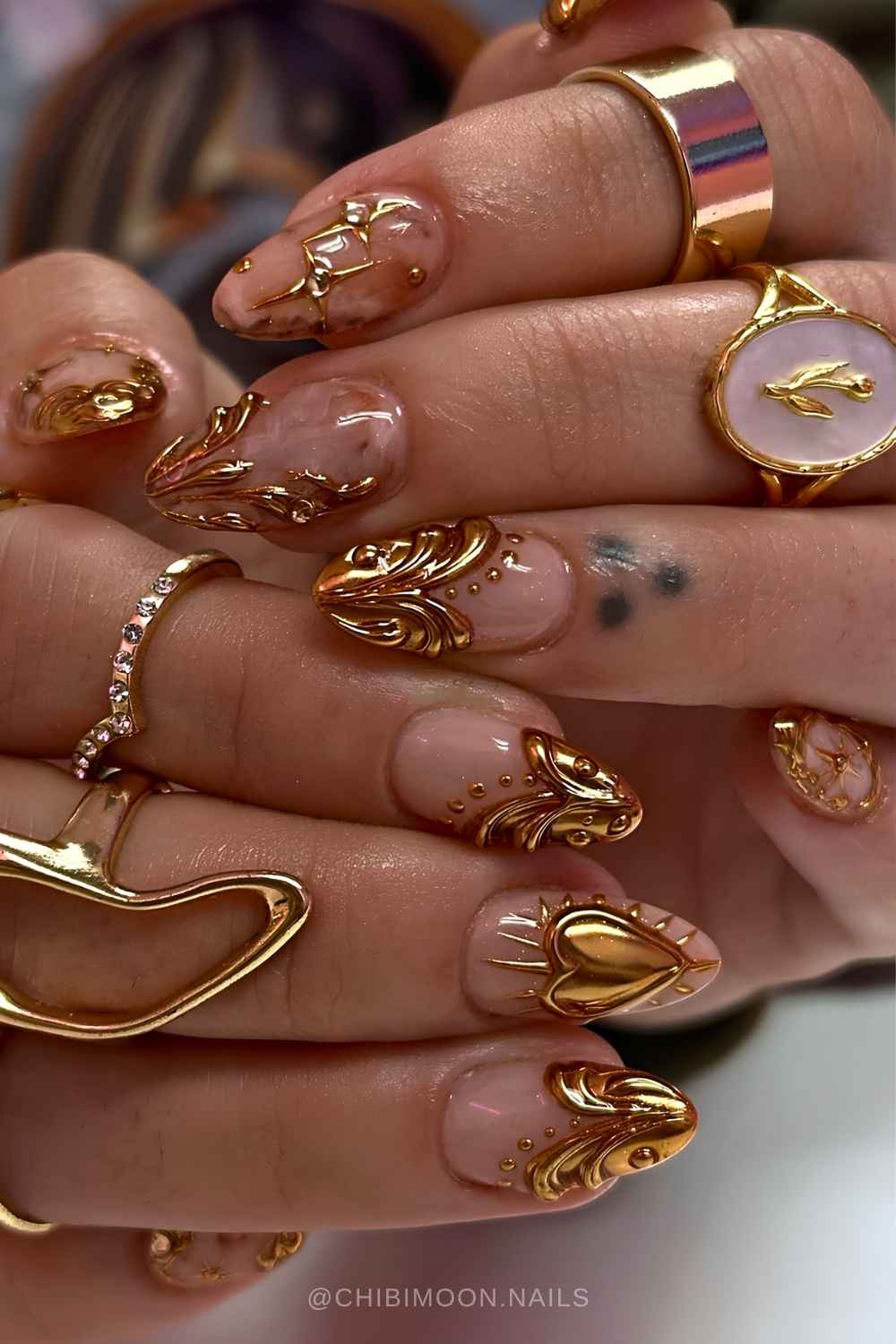
I’ve already booked an appointment to try the trend, and Jennifer Lopez’s Baroque set by Tom Bachik is going straight into my reference folder. Painted florals, ornate gold detailing, full maximalism - yes, that’s the direction I’m taking.
You absolutely don’t have to go that far. A milky base with a few raised gold curls is enough to bring some Baroque opulence into your next mani.
And honestly, after years of paying $80 for beige nails with one microscopic line on them, I think we’ve earned a little decoration.